I’ll never forget the first time I baked pollock fish—it was one of those “what’s for dinner?” nights when I needed something quick, healthy, and delicious. I was skeptical at first, but wow, was I surprised! In just 20 minutes, I had flaky, flavorful fish that even my picky eaters loved. The secret? A simple mix of olive oil, spices, and fresh lemon slices. That’s the beauty of learning how to bake pollock fish perfectly—it’s so straightforward, even if you’re not a seasoned cook. Trust me, once you try this recipe, it’ll become a weeknight lifesaver in your kitchen too.
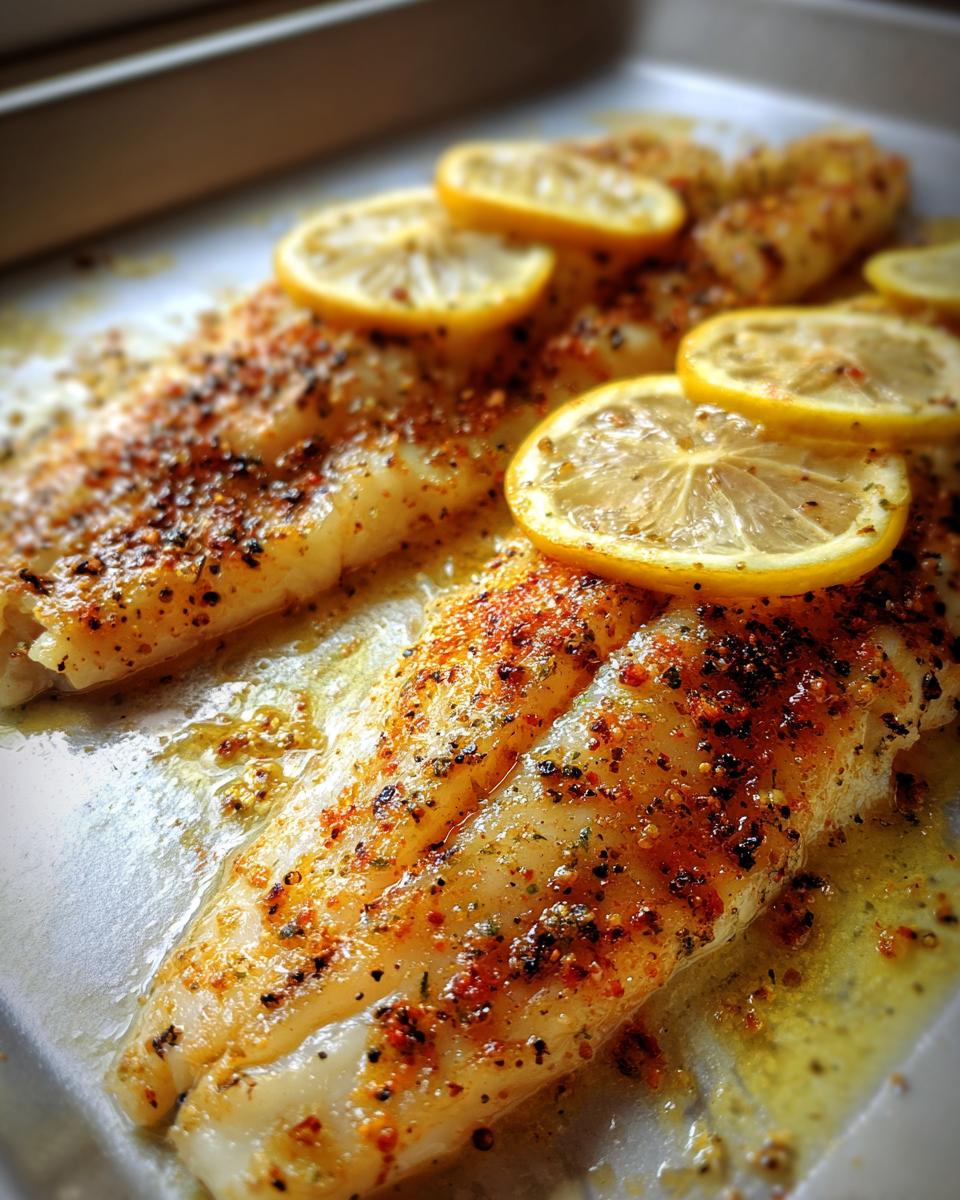
Why You’ll Love This How to Bake Pollock Fish Perfectly Recipe
Let me count the ways! This recipe is my go-to for so many reasons:
- Done in 20 minutes flat – Perfect when you’re starving and need dinner now
- Just a handful of ingredients – Probably already in your pantry
- Healthier than takeout – All that lean protein without heavy sauces
- Crazy flavorful – The garlic-paprika combo makes it taste gourmet
- Foolproof method – Even my teenager can make this without burning it
Honestly, it’s the easiest way I know to impress people while barely trying!
Ingredients for How to Bake Pollock Fish Perfectly
Here’s all you need – I promise it’s nothing fancy! These exact measurements make all the difference:
- 2 pollock fillets (about 6 oz each) – fresh is best, but frozen works too (just thaw first!)
- 1 tablespoon olive oil – regular, not extra virgin (it burns too easily in the oven)
- 1 teaspoon garlic powder – trust me, powder sticks better than fresh here
- 1 teaspoon paprika – sweet or smoked, your choice!
- 1/2 teaspoon salt – I use kosher for even distribution
- 1/2 teaspoon black pepper – freshly ground if you’ve got it
- 1 lemon, sliced – thin rounds for pretty presentation
See? Told you it was simple. Now let’s make some magic!
How to Bake Pollock Fish Perfectly: Step-by-Step Instructions
Ready to make the most delicious, flaky pollock you’ve ever tasted? Here’s exactly how I do it – follow these steps and you can’t go wrong!
Step 1: Preheat and Prepare
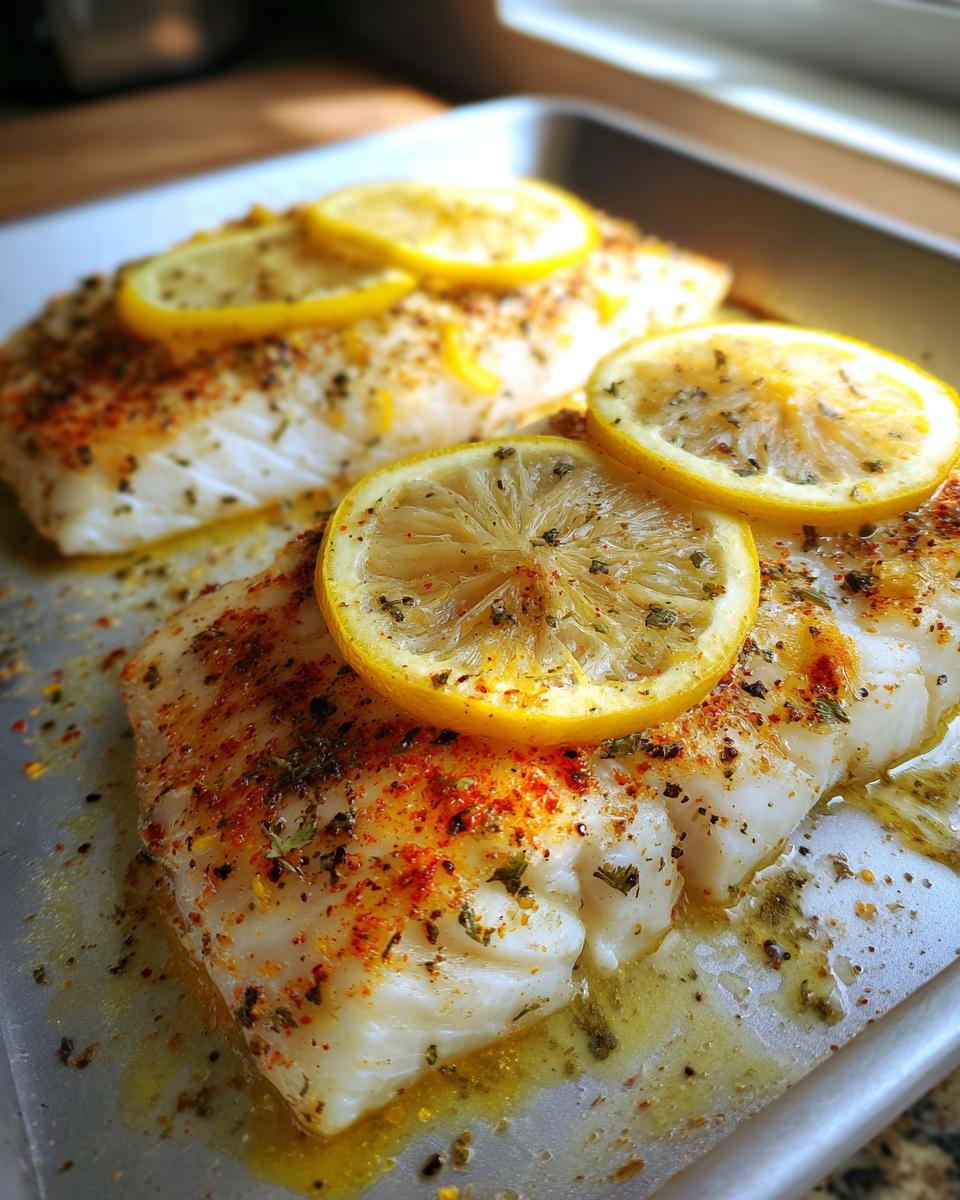
First things first – crank that oven to 400°F (200°C). While it heats up, line your baking sheet with parchment paper. I learned this trick the hard way – no sticking, no scrubbing pans later! Just grab a standard rimmed baking sheet – no need for anything fancy here.
Step 2: Season the Fish
Now for the fun part! Place your pollock fillets on the prepared sheet. Drizzle that olive oil evenly over both – I like to use my hands to gently rub it in. Then comes the flavor party: sprinkle garlic powder, paprika, salt, and pepper over both sides. Don’t be shy! Make sure every inch gets some love. Those spices are what take this from “eh” to “wow!”
Step 3: Bake to Perfection
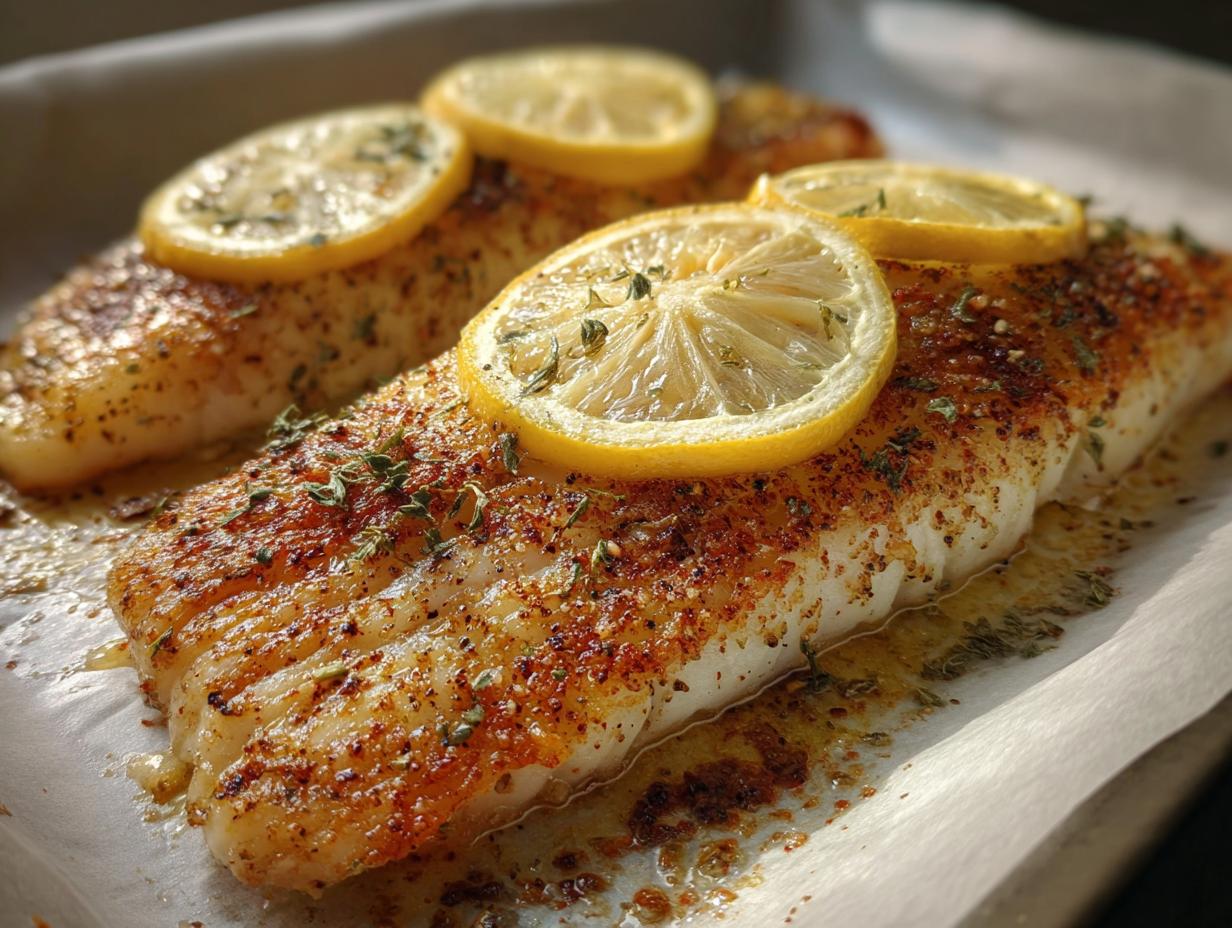
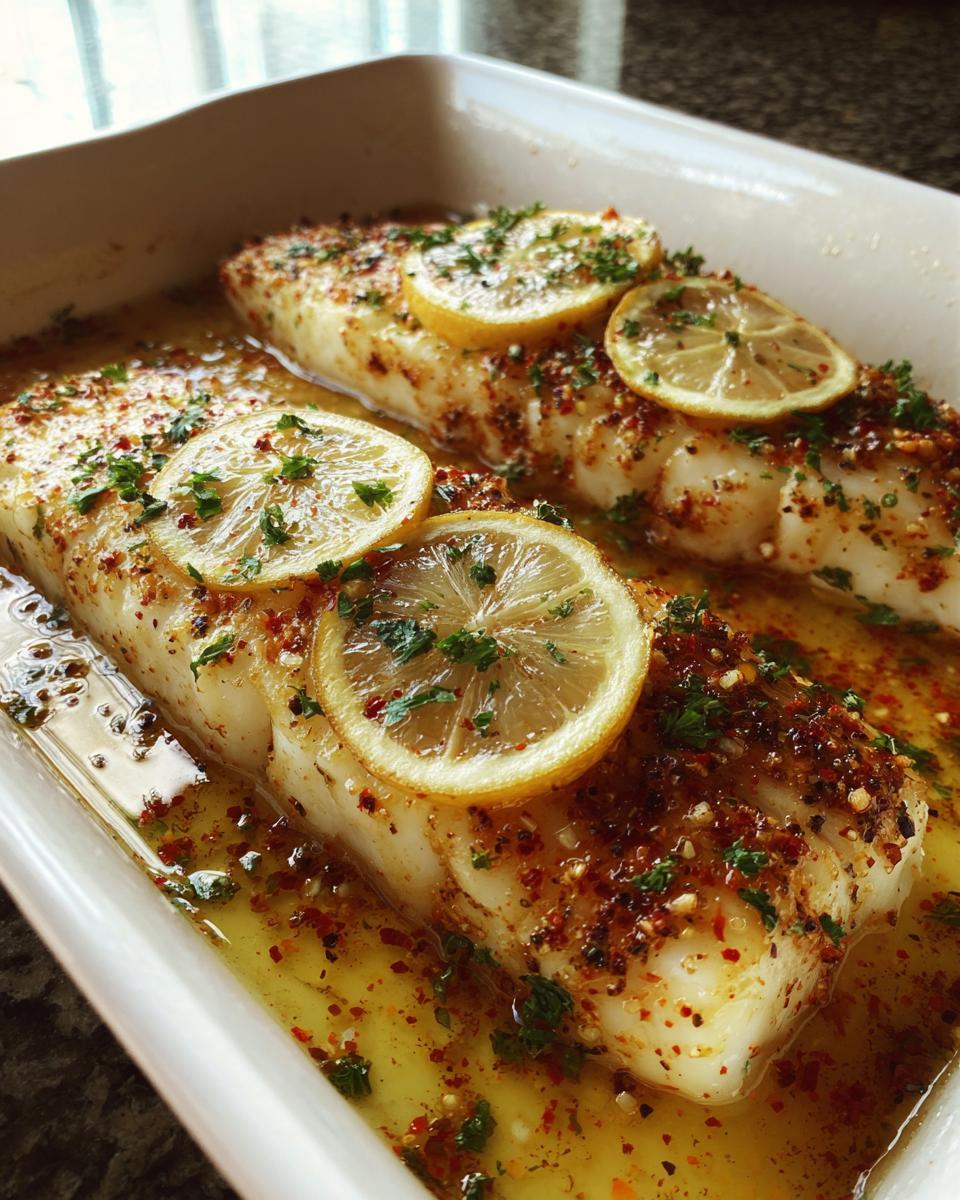
Here’s where the magic happens! Arrange those pretty lemon slices on top – they’ll keep the fish moist and add bright flavor. Pop it in the oven for 15 minutes. At the 15-minute mark, do the fork test: gently poke the thickest part. If it flakes easily, it’s done! If not, give it another 2-3 minutes – but watch carefully. Overcooked fish is sad fish. When it’s perfectly opaque and flakes with no resistance, take it out immediately. That’s it – dinner is served!
Tips for How to Bake Pollock Fish Perfectly
After making this recipe countless times, I’ve picked up some tricks that take it from good to restaurant-quality every single time:
- Freshness check – Your fish should smell like the ocean breeze, not fishy! Press the flesh – it should spring back, not leave an indent.
- Herb magic – Try fresh dill or parsley instead of dried spices for a brighter flavor. Just chop and sprinkle over the lemon slices before baking.
- Watch the clock – Set a timer for 15 minutes religiously. Pollock goes from perfect to rubbery fast if you blink!
- Pat dry first – Blot fillets with paper towels before seasoning – helps the spices stick better.
- Broil finish – For extra color, broil the last 1-2 minutes (but don’t walk away!).
These little touches make all the difference between “meh” and “more please!”
Ingredient Substitutions for Baking Pollock Fish
No pollock on hand? No problem! Here are my go-to swaps that work just as well:
- Cod or haddock are perfect alternatives – they have a similar mild flavor and flaky texture.
- Fresh herbs can replace dried – just use triple the amount (1 tablespoon fresh dill or parsley instead of 1 teaspoon dried).
- Avocado oil works if you’re out of olive oil – it has a high smoke point and a neutral taste.
- Lime slices instead of lemon for a slightly tangier twist.
Flexibility is key – make it work with what you’ve got!
Serving Suggestions for Baked Pollock Fish
Now for the best part – what to serve with your gorgeous baked pollock! My family loves it over a bed of fluffy quinoa or brown rice. For veggies, simple steamed asparagus or roasted Brussels sprouts are perfect. And don’t forget a dollop of tartar sauce or a squeeze of extra lemon – heaven on a plate!
Storage and Reheating Instructions
Leftovers? No problem! Store any extra baked pollock in an airtight container in the fridge for up to 2 days. To freeze, wrap each fillet tightly in plastic wrap then foil – they’ll keep for a month. When reheating, I swear by the oven method: place fish on a baking sheet, add a splash of water, and cover with foil. Heat at 275°F (135°C) for about 15 minutes – slow and low keeps it from drying out. Microwave works in a pinch, but just 30-second bursts to avoid that rubbery texture!
Nutritional Information for How to Bake Pollock Fish Perfectly
Here’s the scoop on what you’re eating (and feeling good about!): Each serving packs about 150 calories, 25g protein, and just 5g fat. Note: Nutrition varies based on ingredients/brands – these are estimates. But trust me, it’s the kind of meal that makes both your taste buds and waistline happy!
Common Questions About Baking Pollock Fish
I get asked about this recipe all the time – here are the answers to the questions that pop up most often in my kitchen:
Q: Can I use frozen pollock?
Absolutely! Just thaw it overnight in the fridge first – never at room temperature. Pat it super dry with paper towels before seasoning, or you’ll end up with soggy fish. Frozen works great in a pinch!
Q: How do I really know it’s cooked through?
The fork test never lies! Gently poke the thickest part – if it flakes easily and looks opaque all the way through, it’s done. If you’re nervous, an instant-read thermometer should read 145°F (63°C). But honestly? After making this weekly, I can just look at it now!
Q: My fish always sticks – help!
Two words: parchment paper. Lifesaver! If you’re out, grease the pan well with oil (not butter – it burns). And never try to move the fillets too soon – let them rest a minute after baking.
Q: Can I prep this ahead?
Sort of! You can mix the dry spices and slice lemons ahead, but wait to season the fish until right before baking. Otherwise, the salt draws out moisture and you get mushy texture. Learned that one the hard way!
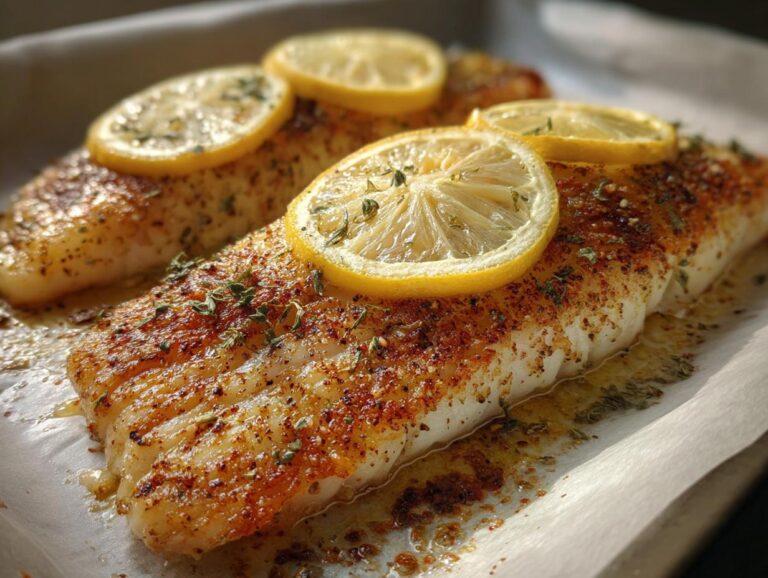
How to Bake Pollock Fish Perfectly in Just 20 Minutes
Learn how to bake pollock fish perfectly in just 20 minutes with this simple and straightforward recipe.
- Total Time: 20 minutes
- Yield: 2 servings 1x
Ingredients
- 2 pollock fillets
- 1 tablespoon olive oil
- 1 teaspoon garlic powder
- 1 teaspoon paprika
- 1/2 teaspoon salt
- 1/2 teaspoon black pepper
- 1 lemon, sliced
Instructions
- Preheat your oven to 400°F (200°C).
- Place the pollock fillets on a baking sheet lined with parchment paper.
- Drizzle olive oil over the fillets.
- Sprinkle garlic powder, paprika, salt, and black pepper evenly on both sides.
- Place lemon slices on top of the fillets.
- Bake for 15-20 minutes or until the fish is cooked through and flakes easily with a fork.
- Serve immediately.
Notes
- Ensure the fish is fresh for the best flavor.
- You can add herbs like dill or parsley for extra flavor.
- Check the fish at the 15-minute mark to avoid overcooking.
- Prep Time: 5 minutes
- Cook Time: 15 minutes
- Category: Main Course
- Method: Baking
- Cuisine: American
- Diet: Low Calorie
Nutrition
- Serving Size: 1 fillet
- Calories: 150
- Sugar: 0g
- Sodium: 300mg
- Fat: 5g
- Saturated Fat: 1g
- Unsaturated Fat: 3g
- Trans Fat: 0g
- Carbohydrates: 1g
- Fiber: 0g
- Protein: 25g
- Cholesterol: 60mg