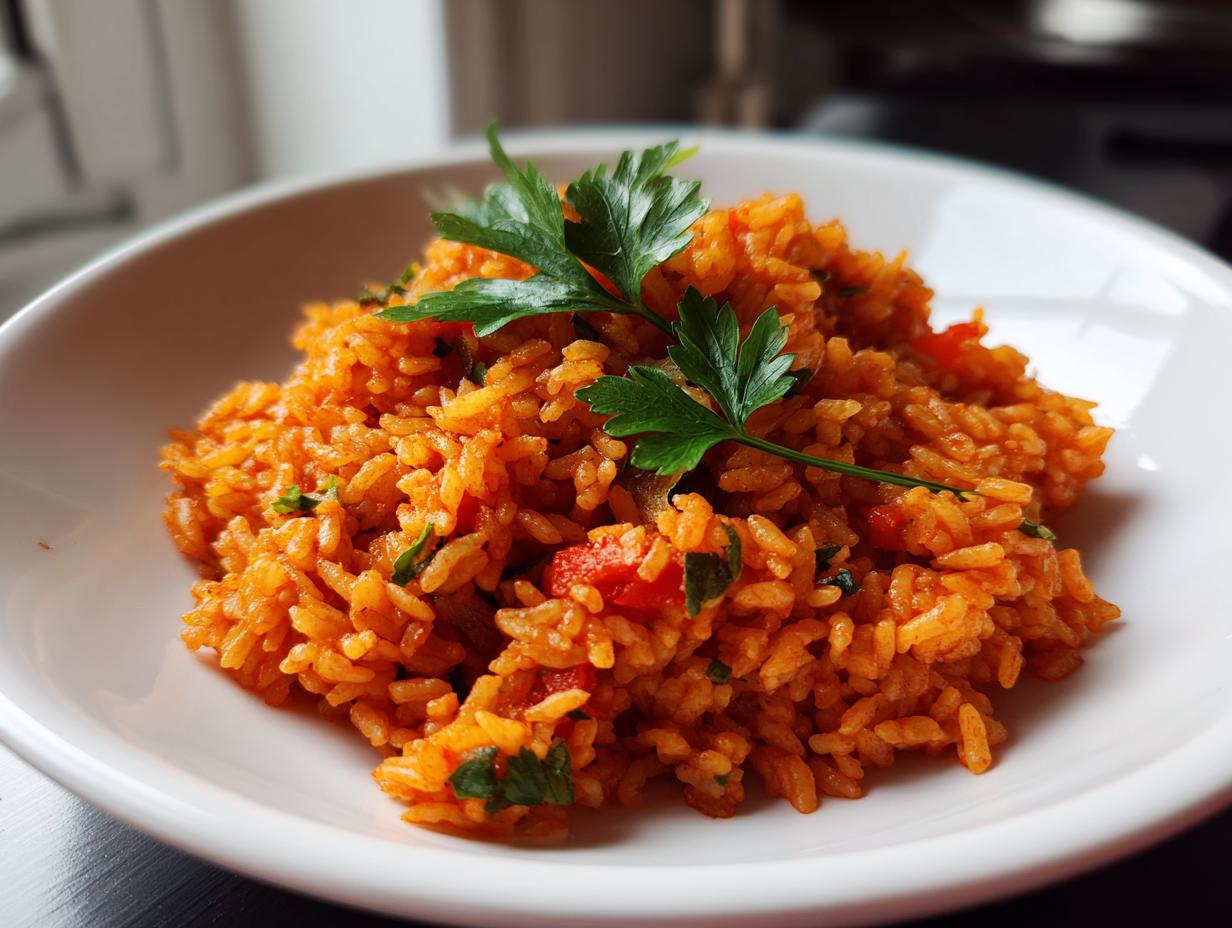
There’s nothing quite like the smell of Nigerian Jollof Rice wafting through the house – that rich, smoky aroma of tomatoes, peppers, and spices that instantly makes your mouth water. I still remember my auntie’s famous Jollof, always the star of our family gatherings, with everyone sneaking spoonfuls straight from the pot before it even hit the serving platter. That’s the magic of this dish – it’s not just food, it’s memories, laughter, and love all cooked up in one pot.
After years of trial and error (and yes, a few burnt-bottom disasters), I’ve perfected my version of Nigerian Jollof Rice. The secret? Patience with the tomato base and never skimping on the scotch bonnet peppers – they give it that authentic kick. Whether it’s a Sunday family dinner or a big party, this recipe never fails to disappear fast. And let’s be honest – the real test of good Jollof is watching people go back for seconds before they’ve even finished their first plate!
What makes my Nigerian Jollof Rice special is how I balance the heat with just enough sweetness from the peppers and tomatoes. I learned from my grandmother that the key is in the fry – letting those blended peppers cook down until they’re almost sticking to the pot. That’s when you know you’ve got the flavor foundation right. Trust me, once you’ve had proper homemade Jollof, you’ll never look at plain rice the same way again.
Why You’ll Love This Nigerian Jollof Rice
Listen, I know everyone claims their Jollof is the best, but this recipe? It’s got that perfect balance that’ll have your taste buds dancing. Here’s why it’s become my go-to dish for everything from weeknight dinners to big celebrations:
- Bold, complex flavors – The blend of tomatoes, scotch bonnet peppers, and aromatic spices creates that signature Nigerian Jollof taste you crave. It’s spicy, smoky, and just a little bit sweet.
- One-pot wonder – No fancy techniques here! Everything cooks together in a single pot, making cleanup a breeze (and impressing everyone with how little mess you made).
- Party superstar – This Nigerian Jollof Rice scales up beautifully – just double or triple the recipe when you’re feeding a crowd. It’s always the first dish to disappear at gatherings!
- Endlessly adaptable – Vegetarian? Use veggie stock. Want more protein? Toss in some chicken or shrimp. The base recipe welcomes your personal touches.
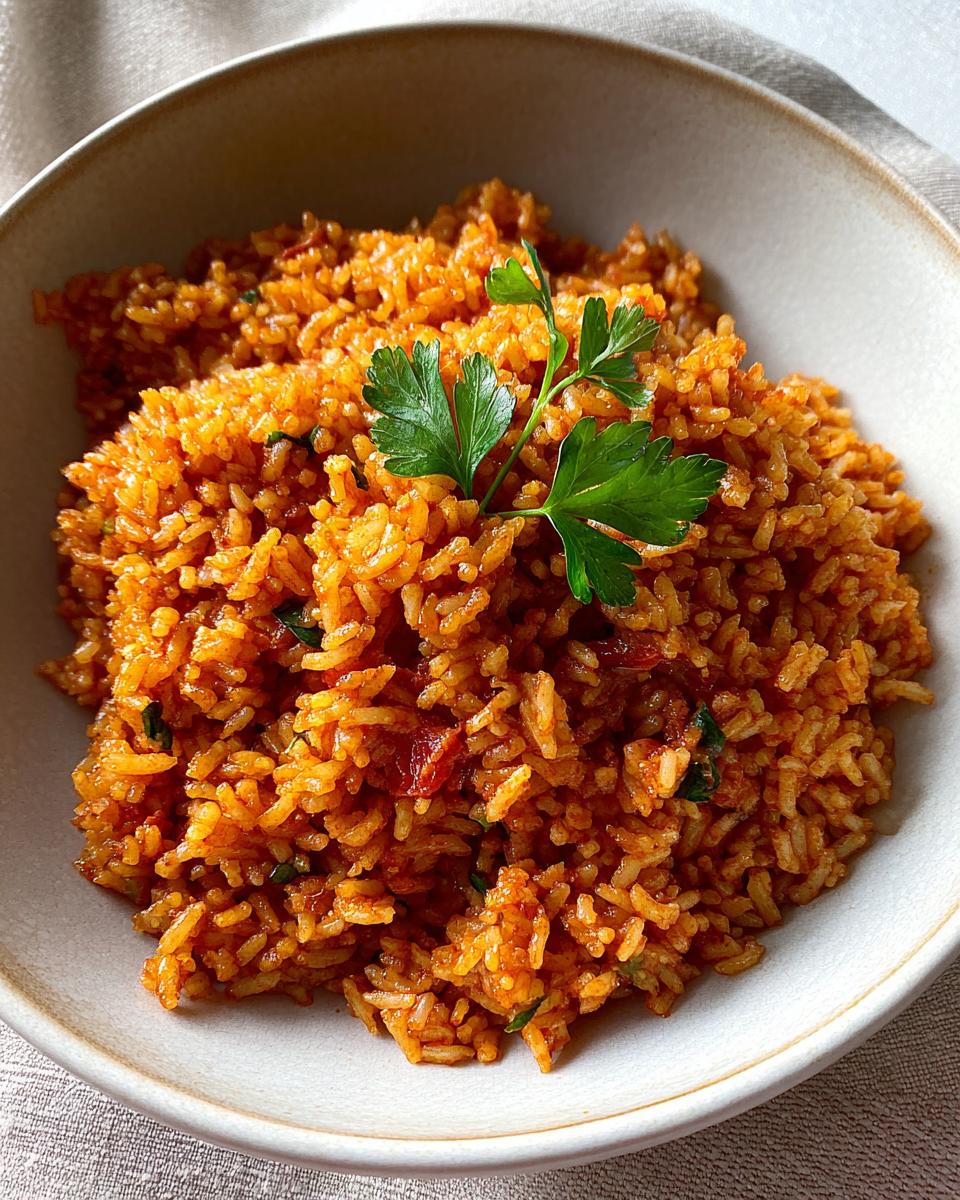
The best part? That beautiful orange-red hue that tells everyone this isn’t just rice – it’s an experience. Wait till you see how the grains soak up all those amazing flavors!
Ingredients for Nigerian Jollof Rice
Now, let’s talk ingredients – because with Jollof, quality matters! These are the exact items I always have ready before I start cooking. No vague “some of this” or “a little of that” here – precise measurements give you that perfect balance every time.
- 2 cups long grain parboiled rice – This is non-negotiable in my book. The parboiled variety holds its shape better and absorbs all that glorious sauce without turning mushy.
- 3 cups chicken or vegetable stock – Homemade is ideal, but store-bought works too. Just watch the salt if using bouillon cubes!
- 1/2 cup vegetable oil – You might think it’s a lot, but trust me, that’s what gives our Jollof its rich texture.
- 1 large onion, chopped – I like mine finely diced so they melt into the base. Yellow onions work great here.
- 3 ripe tomatoes, blended smooth – Roma tomatoes are my favorite – they’re meaty and less watery.
- 1 red bell pepper, blended – This adds sweetness and that vibrant color we love.
- 2 scotch bonnet peppers (or habanero), blended – The heat source! Remove seeds if you’re sensitive to spice.
- 2 cloves garlic, minced – Fresh is best – none of that jarred stuff!
- 1 tbsp fresh ginger, grated – A little goes a long way for that warm, zippy flavor.
- 2 tbsp tomato paste – This is our secret weapon for depth of flavor and color.
- 1 tsp dried thyme – Rubbed between your fingers before adding to release the oils.
- 1 tsp curry powder – Just a touch – don’t overdo it!
- 1 tsp white pepper – More subtle than black pepper in this application.
- 1 bay leaf – Remove it before serving – it’s done its job by then.
- Salt to taste – I start with 1 tsp and adjust at the end.
Pro tip: Have all your ingredients prepped and ready before you turn on the stove. That tomato base waits for no one once it starts cooking!
Equipment Needed for Nigerian Jollof Rice
Before we dive into cooking, let’s talk tools! You don’t need fancy gadgets for amazing Jollof, but these basics make all the difference between good and great results. Here’s what I always pull out of my kitchen cabinets:
- Heavy-bottomed pot – A Dutch oven or thick aluminum pot is perfect. That even heat distribution prevents burning – crucial for that perfect Jollof bottom layer!
- Wooden spoon – My weapon of choice for stirring. It’s gentle on the pot and great for scraping up all those tasty browned bits.
- Blender or food processor – For getting that tomato-pepper mixture silky smooth. A bullet blender works in a pinch too.
- Measuring cups and spoons – Precision matters, especially with the rice-to-liquid ratio.
- Chef’s knife and cutting board – For prepping all those fresh aromatics.
- Fine mesh sieve (optional but helpful) – Sometimes I strain my blended peppers for extra smoothness, but this isn’t mandatory.
That’s it! See? No specialty equipment needed. Just solid basics that probably already live in your kitchen. Now let’s get cooking!
How to Make Nigerian Jollof Rice
Alright, let’s get to the fun part – making magic happen in one pot! I’ll walk you through each step just like my auntie taught me, with all the little tricks that make Nigerian Jollof Rice so special. Follow along closely, and you’ll have the most flavorful rice of your life!
Step 1: Sauté the Aromatics
First, heat that half cup of oil in your heavy-bottomed pot over medium heat. Don’t skimp here – the oil helps carry all those amazing flavors through every grain of rice. When the oil shimmers, toss in your chopped onions and stir them around. We’re looking for golden, not burnt – about 4-5 minutes should do it.
Now comes the flavor bomb: add your minced garlic and grated ginger. The smell at this point is heavenly! Stir constantly for just 30 seconds – we want to wake up those aromatics without letting them burn. Then spoon in the tomato paste and keep stirring. Watch how it deepens in color – that’s the flavor developing. After about 2 minutes, your kitchen should smell incredible!
Step 2: Cook the Tomato Base
Here’s where the magic happens. Pour in your blended tomatoes, bell pepper, and scotch bonnet peppers. Careful – it might splatter a bit! Stir everything together, then let it bubble away. This is the most important step – we’re cooking out the raw tomato taste and concentrating those flavors.
You’ll know it’s ready when the mixture thickens and the oil starts to separate, pooling around the edges. This takes about 15-20 minutes, but don’t rush it! Stir occasionally to prevent sticking. The color will deepen to a rich red-orange – that’s when you add your thyme, curry powder, white pepper, bay leaf, and salt. Give it one good stir to wake up those spices.
Step 3: Simmer the Rice
Now for the rice! Rinse your parboiled rice in cold water until it runs clear – this removes excess starch. Add it to the pot and stir well, coating every grain with that luscious sauce. Pour in your stock (it should sizzle when it hits the hot pot), give one gentle stir to distribute everything evenly, then cover tightly with a lid.
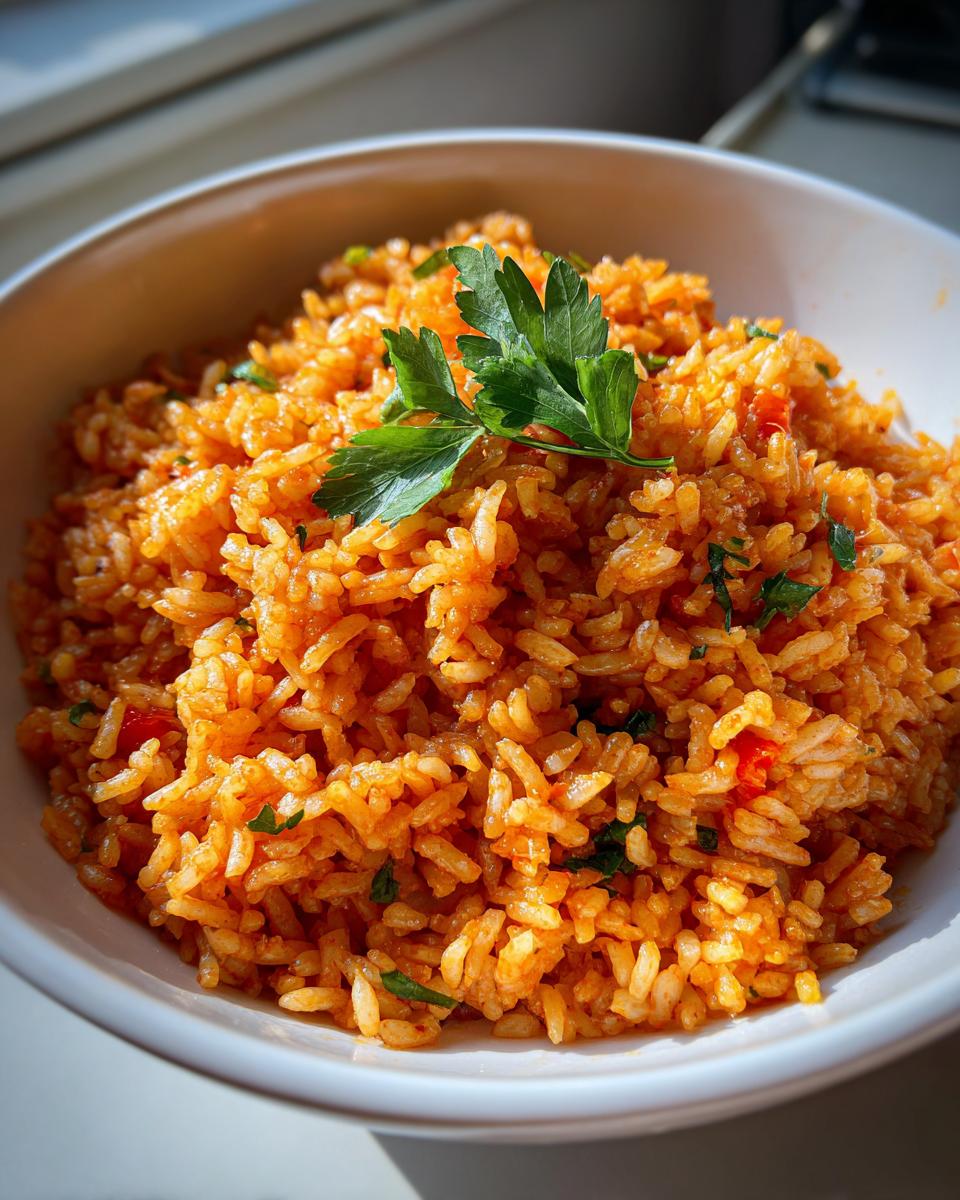
Here’s the key: low and slow. Reduce the heat to the lowest setting and resist the urge to peek! Let it cook undisturbed for 25 minutes. After that, turn off the heat but leave the lid on for another 5 minutes – this lets the steam finish the job. Finally, fluff with a fork, marvel at that perfect texture, and serve immediately. Oh, and that slightly crispy bottom layer? That’s the prize for all your patience!
Tips for Perfect Nigerian Jollof Rice
After burning my fair share of pots (we’ve all been there!), I’ve learned a few secrets for foolproof Jollof every time. First, always let your rice rest for 5 minutes after cooking – that steam finishes the job perfectly. If you’re nervous about spice, start with just one scotch bonnet pepper; you can always add more heat later. And here’s my grandma’s trick: place a sheet of foil under the lid for extra tight sealing – no precious steam escapes!
For extra flavor, try frying some sliced onions until crisp for a garnish. And whatever you do, don’t stir once that rice starts simmering – that’s how you get mushy Jollof. Oh, and if your rice isn’t quite done? Add a splash of hot water, cover, and give it 5 more minutes. Works like magic!
Serving Suggestions for Nigerian Jollof Rice
Now that you’ve made this glorious pot of Nigerian Jollof Rice, let’s talk about how to serve it up right! Jollof is like the life of the party – it plays well with so many dishes. My personal rule? Always have something crunchy, something protein-packed, and something cooling alongside it. Here are my favorite ways to round out the meal:
- Fried plantains (dodo) – The sweet caramelized edges are perfect for balancing the spicy rice. I like mine cut on a diagonal for maximum crispiness!
- Grilled or fried chicken – Whether it’s spicy suya-style or simple roasted, chicken and Jollof are a match made in heaven. The juices running into the rice? Chef’s kiss!
- Creamy coleslaw – That cool crunch cuts through the richness beautifully. My quick version? Shredded cabbage, carrots, mayo, a splash of vinegar, and a pinch of sugar.
- Boiled or fried eggs – For when you want protein but don’t feel like cooking meat. I love cutting them in half so the yolk runs into the rice.
- Beef or goat meat stew – Special occasion move right here! The thick sauce takes the whole meal to another level.
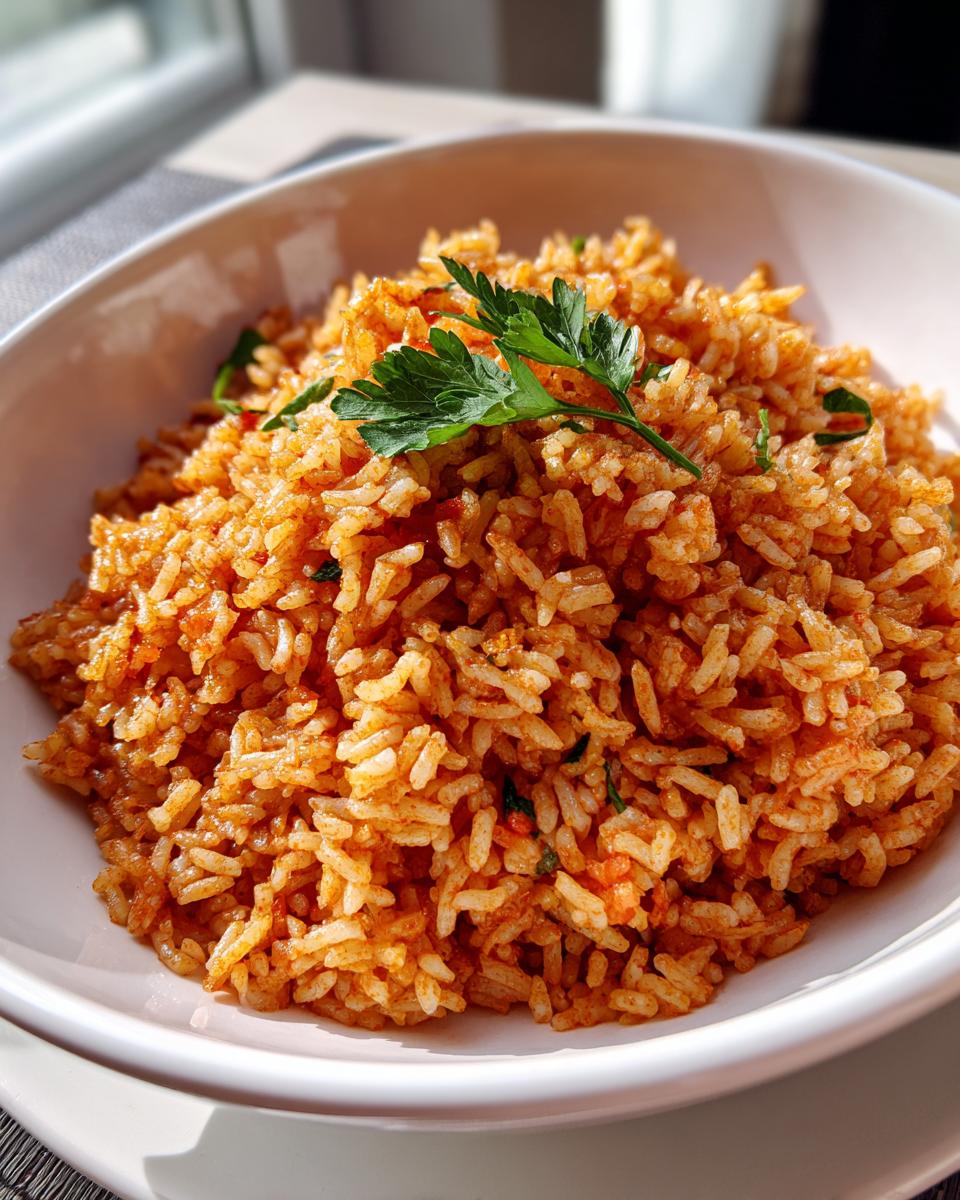
Presentation matters too! I always serve my Nigerian Jollof Rice in a big, beautiful bowl with garnishes on top – usually some extra fried onions or fresh parsley. For parties, I’ll do individual portions in small bowls with all the sides arranged around them. Oh, and don’t forget the drinks – chilled Chapman cocktail or ginger beer works wonders with the spices!
Pro tip: Leftover Jollof (if you’re lucky enough to have any!) makes amazing fried rice the next day. Just scramble some eggs into it in a hot pan – breakfast of champions!
Storage & Reheating Instructions
Let’s be real – Nigerian Jollof Rice tastes best fresh, but life happens! Here’s how to keep those amazing flavors intact for later. First rule? Cool it completely before storing – no one wants soggy, steamed-up rice. Spread it out on a baking sheet if you’re in a hurry. Then, into airtight containers it goes!
Fridge storage: Your Jollof will stay perfect for 3-4 days in the fridge. I like to portion mine out so I can grab single servings. Press plastic wrap directly onto the rice’s surface before sealing the container – this prevents that weird dry crust from forming.
Freezer magic: Yes, you can freeze Jollof! Portion into freezer bags, squeeze out all the air, and lay them flat. They’ll keep for 2-3 months. Thaw overnight in the fridge when you’re ready – no microwave defrosting unless you like unevenly heated rice!
Reheating pro tips: The stovetop is king here. Add a splash of water or broth to a pan, sprinkle your rice evenly, then cover on low heat. Stir occasionally until piping hot – about 5-7 minutes. Microwave works in a pinch (cover with a damp paper towel), but it’ll never be quite as good. And whatever you do, don’t overdo it – reheated rice should be steaming, not dried out!
One last thing – that slightly crispy bottom layer from the first cook? It won’t come back after storage, but you can fake it by spreading your rice thin in the pan and letting it sit undisturbed for a minute at the end of reheating. Not quite the same, but still delicious!
Nigerian Jollof Rice FAQs
I get asked about Nigerian Jollof Rice all the time – it’s one of those dishes that sparks so many questions! Here are the answers to the ones I hear most often, straight from my years of Jollof-making adventures (and yes, a few mishaps along the way!).
Can I use basmati rice instead of parboiled?
Oh, this one comes up a lot! While you can use basmati in a pinch, I really don’t recommend it for authentic Nigerian Jollof. Basmati is too delicate – it’ll turn mushy with all that flavorful sauce. If you absolutely must substitute, try long grain rice (not instant!) and reduce the liquid slightly. But trust me, parboiled rice is worth seeking out – it’s what gives Jollof that perfect texture where every grain stands proud!
How do I make it less spicy?
No shame in dialing down the heat! First, remove the seeds from your scotch bonnet peppers – that’s where most of the fire lives. You can also start with just half a pepper and add more later if you want. Another trick? Add a tablespoon of honey or sugar when cooking the tomato base – it balances the heat beautifully. And always serve with cooling sides like yogurt or avocado to tame the flames!
Why is my rice sticking to the bottom?
Ah, the classic Jollof struggle! First, make sure you’re using a heavy-bottomed pot – thin pans burn easily. Keep the heat low once you add the rice, and resist stirring after the first mix. If you’re really worried, try this trick from my grandma: place a heat diffuser under the pot. And that crispy bottom layer? Some people fight it, but in my house, we fight over it – it’s the best part!
Can I make this vegetarian or vegan?
Absolutely! Just swap the chicken stock for vegetable broth – I like using mushroom stock for extra umami. All the other ingredients are already plant-based. For protein, I sometimes add fried tofu or mushrooms during the last 10 minutes of cooking. The spices give so much flavor that no one will miss the meat, I promise!
How do I know when the tomato base is ready?
Watch for three signs: the mixture should be thick enough that your spoon leaves a trail, the color changes from bright red to deep orange-red, and you’ll see oil pooling around the edges. It usually takes 15-20 minutes of patient simmering – don’t rush this step! This is where all that amazing Jollof flavor develops, so give it the time it deserves.
Got more questions? Drop them in the comments – I’m always happy to help troubleshoot your Jollof adventures! Remember, even my first attempts weren’t perfect, but that’s how we learn. The most important ingredient is always love (and maybe an extra scotch bonnet pepper or two!).
Nutritional Information
Now, I’m no nutritionist, but after years of making Nigerian Jollof Rice (and eating way too much of it!), I’ve learned a thing or two about what’s in this delicious dish. Keep in mind these numbers can vary based on your specific ingredients – especially since we all tweak our recipes a bit!
For a standard serving (about 1 cup of cooked Jollof Rice), you’re looking at:
- Calories: Around 350 – mostly from those good carbs that give you energy
- Protein: About 6g – add some chicken or fish to bump this up!
- Carbs: Roughly 55g – perfect fuel for your day
- Fiber: 3g from all those lovely tomatoes and peppers
- Fat: About 12g – remember, we use oil for flavor and texture
- Sodium: Around 400mg – depends on your stock and salt
Important note: These values change based on your exact ingredients. Using homemade stock? Different brand of rice? Extra veggies? It all affects the final numbers. The scotch bonnet peppers add virtually no calories but pack a vitamin C punch! And that beautiful red color? That’s lycopene from the tomatoes doing its antioxidant thing.
My philosophy? Good food feeds both body and soul – and Nigerian Jollof Rice definitely does both! Just balance it with plenty of fresh sides and enjoy every flavorful bite.
Share Your Experience
You know what I love most about Nigerian Jollof Rice? How every cook puts their own spin on it! I’d absolutely adore hearing how your version turned out. Did you stick to my exact recipe or add your own special touch? Maybe you threw in some extra veggies or discovered a brilliant shortcut? Spill the beans!
And hey, if you ran into any hiccups along the way, don’t be shy – we’ve all been there! My first Jollof attempt was… well, let’s just say it taught me the importance of watching that tomato base closely. Your questions and stories help make this recipe even better for everyone who tries it next.
Drop me a note below about your Jollof adventures – the triumphs, the surprises, even the kitchen disasters (we’ll laugh about them later!). This dish is all about sharing joy and creating memories, just like those family gatherings where I first fell in love with it. Can’t wait to hear your experiences!
Print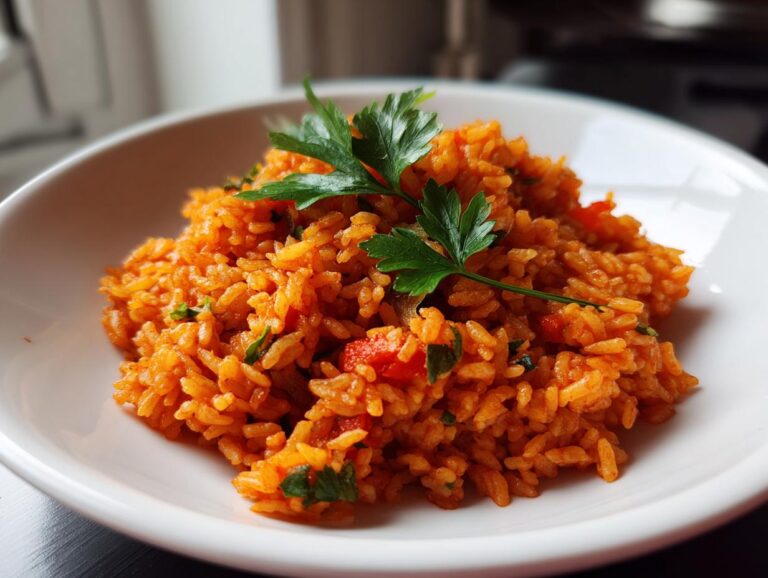
5 Secrets to Perfect Nigerian Jollof Rice Every Time
Nigerian Jollof Rice is a flavorful one-pot dish made with rice, tomatoes, and a blend of spices. It’s a staple at parties and family gatherings.
- Total Time: 45 mins
- Yield: 4 servings 1x
Ingredients
- 2 cups long grain parboiled rice
- 3 cups chicken or vegetable stock
- 1/2 cup vegetable oil
- 1 large onion, chopped
- 3 tomatoes, blended
- 1 red bell pepper, blended
- 2 scotch bonnet peppers, blended
- 2 cloves garlic, minced
- 1 tbsp ginger, grated
- 2 tbsp tomato paste
- 1 tsp thyme
- 1 tsp curry powder
- 1 tsp white pepper
- 1 bay leaf
- Salt to taste
Instructions
- Heat oil in a pot and sauté onions until golden.
- Add garlic, ginger, and tomato paste. Stir for 2 minutes.
- Pour in the blended tomatoes, bell pepper, and scotch bonnet peppers. Cook until the mixture thickens.
- Add thyme, curry powder, white pepper, bay leaf, and salt. Stir well.
- Pour in the rice and stock. Stir, cover, and cook on low heat for 25 minutes.
- Fluff the rice with a fork and serve hot.
Notes
- Use parboiled rice for best results.
- Adjust the spice level by reducing scotch bonnet peppers.
- Let the rice rest for 5 minutes before serving.
- Prep Time: 15 mins
- Cook Time: 30 mins
- Category: Main Dish
- Method: Stovetop
- Cuisine: Nigerian
- Diet: Vegetarian
Nutrition
- Serving Size: 1 cup
- Calories: 350
- Sugar: 5g
- Sodium: 400mg
- Fat: 12g
- Saturated Fat: 2g
- Unsaturated Fat: 8g
- Trans Fat: 0g
- Carbohydrates: 55g
- Fiber: 3g
- Protein: 6g
- Cholesterol: 0mg