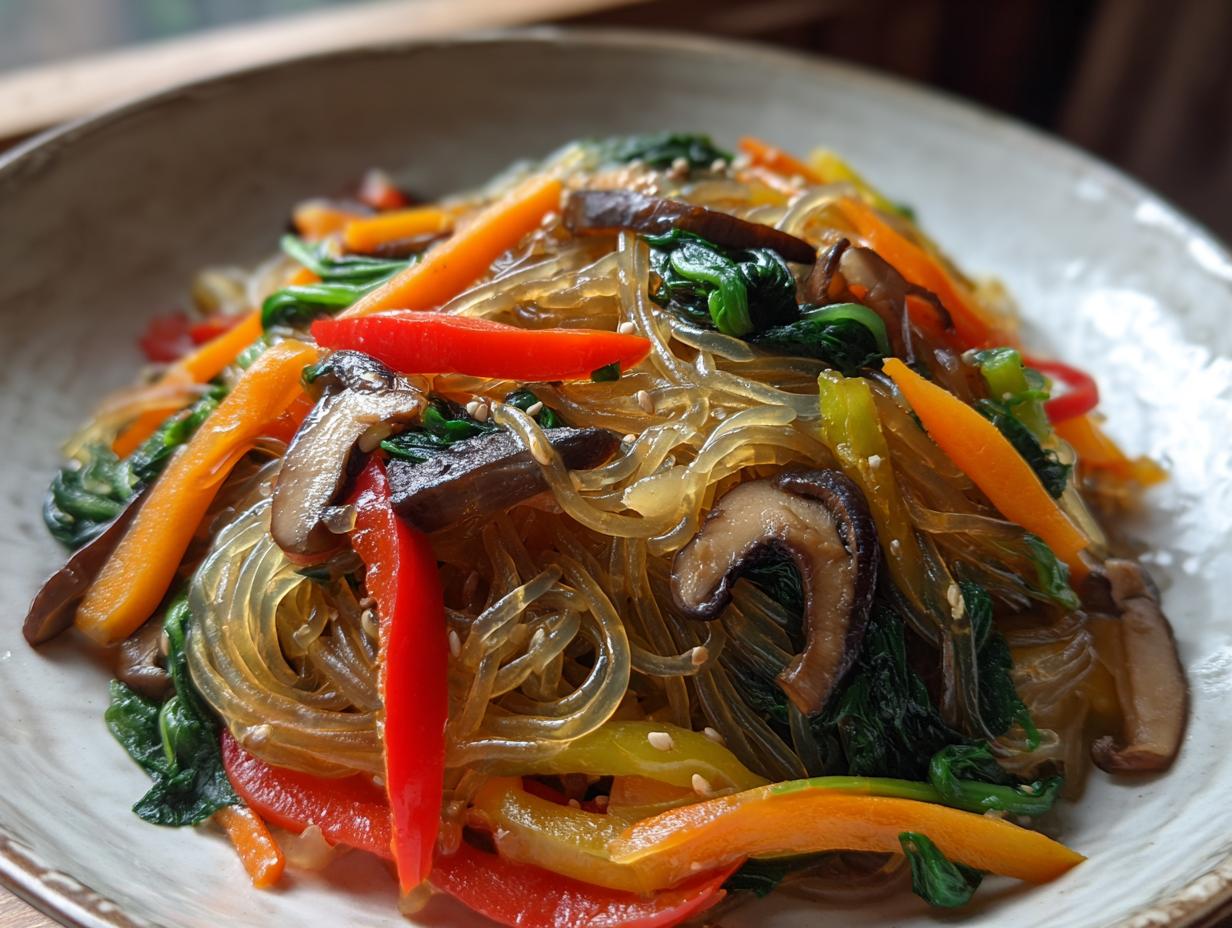
Oh my goodness, friends, do I have a treat for you today! We’re diving headfirst into the vibrant, savory, slightly sweet, and utterly addictive world of Japchae! If you’ve never had it, prepare to fall in love. This Korean glass noodle dish is a feast for the eyes and the taste buds, seriously. It’s packed with colorful veggies and those wonderfully chewy sweet potato starch noodles that just soak up all the amazing flavors. I’ve been obsessed with Korean food for years, ever since a trip to Seoul where I basically ate my way through every market and restaurant I could find. Japchae quickly became a staple in my kitchen because it’s just so versatile—perfect as a side dish for a big Korean BBQ spread, or honestly, a fantastic light meal all on its own. Trust me, you’re going to want to add this one to your regular rotation!
Why You’ll Love This Japchae Recipe
Okay, so why *this* Japchae recipe? Because it’s not just another noodle dish; it’s a celebration in a bowl, and honestly, it’s easier than you think! You’re going to adore it because:
- It’s SO pretty: Seriously, the colors just pop off the plate! It’s a showstopper.
- Flavor explosion: That perfect balance of savory, sweet, and a hint of sesame? Pure magic.
- Surprisingly simple: Don’t let the fancy name fool you; I’ve broken it down so anyone can make it.
- Versatile AF: (Can I say that on a food blog? Oops, I just did!) Serve it hot, cold, as a main, as a side – it works every single time!
The Allure of Japchae
Japchae isn’t just beloved in Korea for nothing! It’s that incredible dance of textures—the bouncy noodles and crisp-tender veggies—all coated in a glossy, irresistible sauce. It’s comforting, it’s exciting, and it just makes you feel good. It’s truly a dish that captures the heart of Korean home cooking.
Gathering Your Japchae Ingredients
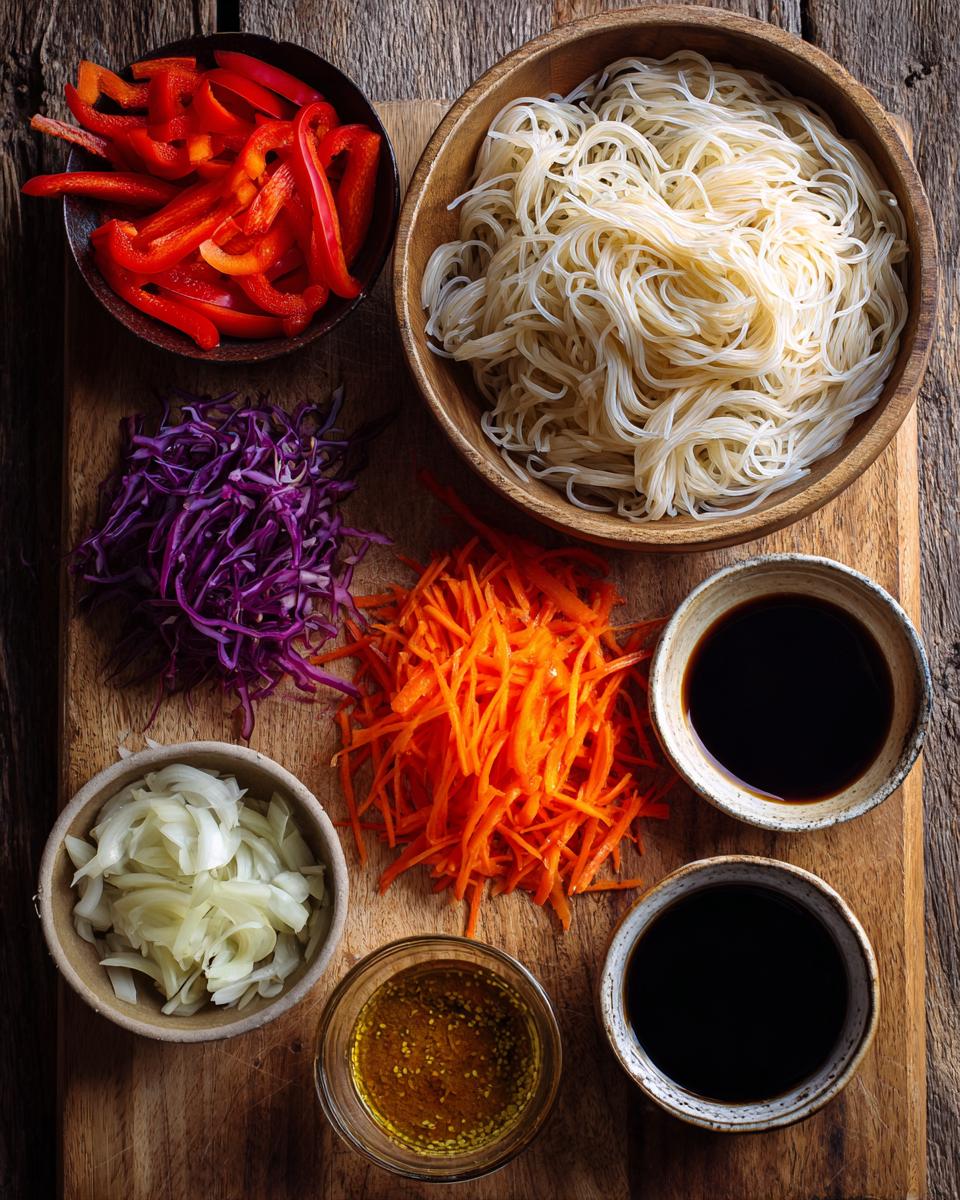
Alright, let’s talk ingredients! One of the things I love most about Japchae is how simple, yet impactful, the components are. You’ll need about 8 ounces of Korean glass noodles, also known as dangmyeon – these are the star of the show. For the noodles themselves, grab 1 tablespoon of sesame oil and 1 teaspoon of soy sauce. Then for the veggies and sauce, you’ll want another tablespoon of sesame oil, one small onion thinly sliced, two carrots julienned (that’s fancy talk for cut into thin matchsticks!), one red bell pepper and one green bell pepper, both thinly sliced. Don’t forget 4 ounces of fresh spinach, blanched and squeezed dry, and 4 ounces of shiitake mushrooms, thinly sliced. A couple of cloves of garlic, minced, are key for flavor. For the sauce, we’re looking at 2 tablespoons of soy sauce, 1 tablespoon of sugar, 1 teaspoon of toasted sesame seeds, and just a pinch of black pepper. See? Nothing too wild, but each one plays its part!
Essential Ingredients for Perfect Japchae
The real magic of Japchae starts with those glass noodles. They’re made from sweet potato starch, which gives them that amazing, chewy, slightly bouncy texture that’s just so satisfying. And sesame oil? Oh my goodness, it’s not just for cooking! It brings that signature nutty, aromatic depth to the whole dish. You’ll use it to coat the cooked noodles to keep them from sticking and to sauté those vibrant veggies for an extra layer of flavor. It really ties everything together!
Customizing Your Japchae Vegetables
Now, here’s where you can totally make this recipe your own! While I’ve listed my go-to veggies, Japchae is super forgiving. Feel free to swap things around based on what you have in the fridge or what’s in season. Zucchini, cut into thin half-moons, works beautifully. Cabbage, thinly shredded, adds a nice crunch. Even wood ear mushrooms or some thinly sliced rehydrated dried shiitakes would be fantastic additions. Just remember to keep your cuts similar in size for even cooking, and don’t be afraid to experiment!
How to Make Japchae: Step-by-Step Guide
Okay, deep breath! Making Japchae might look like a lot of steps, but I promise you, each one is super straightforward, and when you see it all come together, you’ll feel like a total kitchen wizard. We’re going to tackle this in stages, making sure each component is perfectly prepped before we bring them all together for that grand finale. The key here is not to rush! Enjoy the process, pay attention to the colors and smells, and you’ll end up with a dish that’s not just delicious, but also a labor of love. Let’s get cooking!
Preparing the Japchae Noodles
First up, the star: those amazing glass noodles! You’ll want to follow the package directions for cooking them – usually, it involves boiling them until they’re tender but still have a lovely chew. Once they’re perfectly cooked, drain them immediately and give them a good rinse under cold water. This stops the cooking process and keeps them from clumping. Then, and this is important, toss them right away with 1 tablespoon of sesame oil and 1 teaspoon of soy sauce. This little step prevents them from sticking together and starts building that delicious flavor from the get-go!
Sautéing Your Japchae Vegetables
Now for the gorgeous veggies! Grab your biggest pan or wok – you’ll thank me later. Heat 1 tablespoon of sesame oil over medium-high heat. Once it’s shimmering, toss in your thinly sliced onion, those beautiful julienned carrots, and both your red and green bell peppers. Sauté them for about 3-5 minutes. You want them tender-crisp, not mushy, so keep an eye on them! Next, add the blanched spinach (make sure you’ve squeezed out all that excess water!) and the sliced mushrooms. Give that another 2-3 minutes of sautéing until everything looks vibrant and just cooked through.
Bringing Your Japchae Together
Okay, almost there! To your sautéed veggies, add the minced garlic, the remaining 2 tablespoons of soy sauce, sugar, toasted sesame seeds, and that pinch of black pepper. Stir it all really well to coat every single vegetable in that glorious sauce. The smell at this point is just incredible, trust me! Finally, add your cooked and seasoned glass noodles to the pan. Now, gently toss everything together. You want to make sure the noodles are fully incorporated and heated through, soaking up all those amazing flavors. Keep tossing until every strand of noodle and every piece of veggie is glistening and perfectly mixed. And just like that, you’ve made Japchae!
Tips for Japchae Success
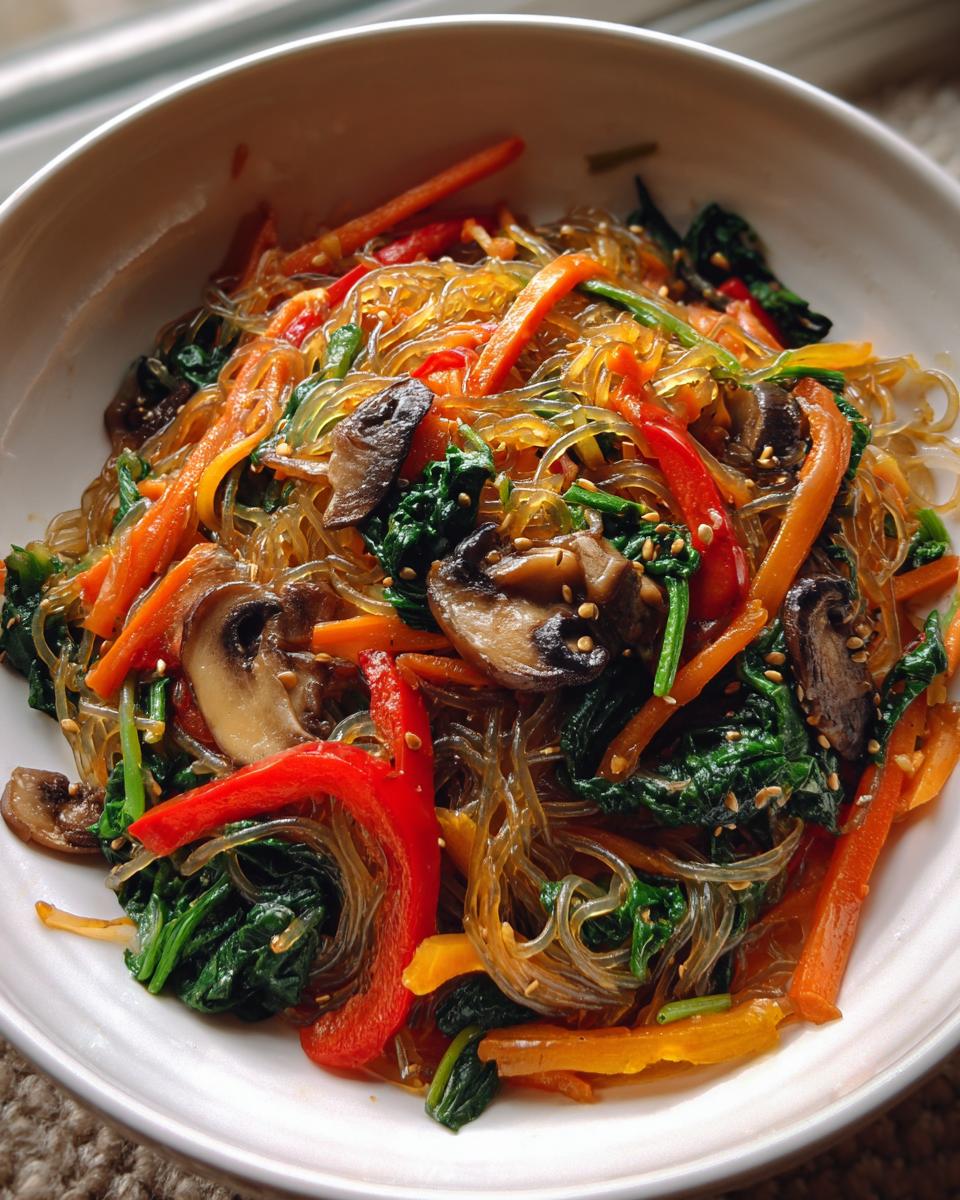
You’ve done all the hard work, now let’s make sure your Japchae is absolutely perfect! I’ve picked up a few little tricks over the years that really make a difference. First off, don’t be shy with the sesame oil – it’s a flavor powerhouse here, and a little extra drizzle right before serving can elevate everything. Also, taste as you go! The beauty of stir-fries is that you can adjust seasonings. Need a bit more sweetness? Add a touch more sugar. Want it saltier? A splash more soy sauce. Don’t be afraid to trust your palate. And remember, fresh ingredients really do shine through, especially with all those beautiful colors!
Achieving the Signature Japchae Texture
The texture is EVERYTHING in Japchae, right? For those glass noodles, the key is al dente – tender but still with a good chew. Don’t overcook them, or they’ll turn mushy. And for the veggies? We’re aiming for tender-crisp. They should still have a little bite, not be soft and limp. This contrast in textures is what makes every mouthful so exciting!
Japchae Serving Suggestions and Storage
So, you’ve made this incredible Japchae, now what? The beauty of this dish is its versatility! It’s fantastic warm, right out of the pan, or even at room temperature. I often make a big batch for parties because it holds up so well. And for storage? Don’t you worry, your delicious efforts won’t go to waste. Keeping it fresh is super easy, meaning you can enjoy those delightful flavors for days to come!
Enjoying Your Japchae
This Japchae is so good, it can totally stand alone as a light meal, but it also shines as part of a bigger spread. I love serving it alongside some grilled beef, or a simple pan-fried tofu if I’m keeping it vegetarian. It’s also a fantastic addition to a Korean BBQ night, offering a fresh, noodle-y contrast to all that savory meat!
Keeping Your Japchae Fresh
Got leftovers? Lucky you! Just pop your Japchae into an airtight container and store it in the refrigerator. It’ll stay fresh and delicious for up to 3 days. To reheat, you can gently warm it in a pan over medium heat, or a quick zap in the microwave works too. Sometimes I add a tiny splash of water or sesame oil to help revive the noodles!
Frequently Asked Questions About Japchae
I get a lot of questions about Japchae, and I love answering them! It means you’re just as excited about this amazing Korean glass noodle dish as I am. So, let’s clear up some common curiosities you might have while you’re whipping up a batch of your own delicious Japchae. Don’t be afraid to ask more in the comments if I don’t cover your burning questions!
Can I Make Japchae Ahead of Time?
Absolutely, yes! Japchae is one of those fantastic dishes that actually tastes even better the next day as the flavors have more time to meld together. You can prepare the entire dish and store it in an airtight container in the fridge for up to 3 days. It’s perfect for meal prep or bringing to a potluck! Just give it a quick toss and reheat gently when you’re ready to serve.
What are the Best Noodles for Japchae?
For authentic Japchae, you absolutely need Korean glass noodles, also known as dangmyeon. These aren’t your typical wheat noodles! They’re made from sweet potato starch, which gives them that unique, translucent appearance and wonderfully chewy, elastic texture that holds up so well in the stir-fry. Don’t try to substitute with rice vermicelli or other noodles; it just won’t be the same, trust me!
Is This Japchae Recipe Vegetarian?
Yes, this specific Japchae recipe, as written, is completely vegetarian! It’s loaded with colorful vegetables and those delicious glass noodles, with no meat products included. That’s one of the reasons I love it so much – it’s naturally veggie-friendly and still incredibly satisfying and flavorful. If you wanted to add meat, you totally could, but it’s perfect as is!
Estimated Japchae Nutritional Information
Okay, so while I’m a “cook by feel” kinda gal, I know some of you like to keep an eye on the numbers! This is an estimate, but for one serving of this delicious Japchae, you’re looking at around 250 calories. It’s got about 10g of fat, 35g of carbs (hello, noodles!), and 5g of protein. Pretty good for such a flavor-packed dish, right?
Share Your Japchae Experience
I absolutely ADORE hearing from you all! If you whip up this Japchae, please, pretty please, let me know how it goes in the comments below. Did you customize the veggies? What did you serve it with? Don’t forget to rate the recipe too! And if you share your beautiful creation on social media, tag me! I can’t wait to see your delicious Japchae!
Print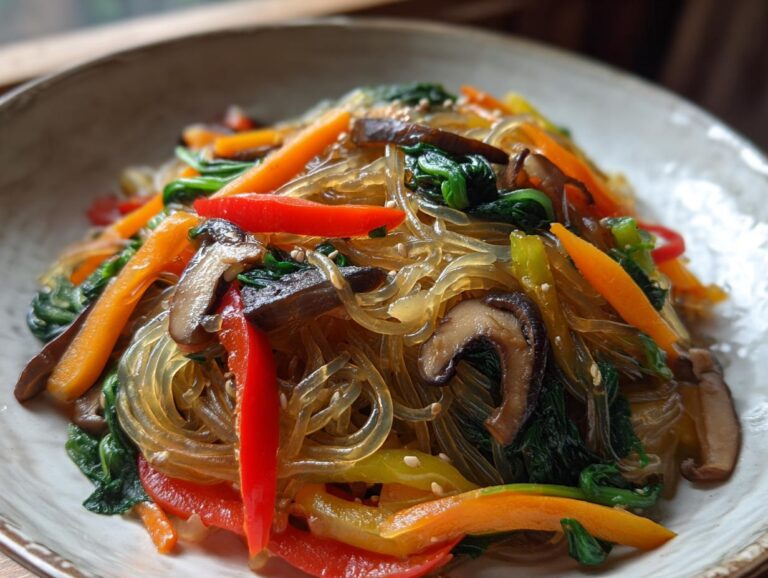
Japchae glass noodle stir-fry
Japchae is a delicious and colorful Korean dish made with glass noodles and various vegetables. It’s often served as a side dish or a main course.
- Total Time: 35 minutes
- Yield: 4 servings 1x
Ingredients
- 8 ounces Korean glass noodles (dangmyeon)
- 1 tablespoon sesame oil (for noodles)
- 1 teaspoon soy sauce (for noodles)
- 1 tablespoon sesame oil (for vegetables)
- 1 small onion, thinly sliced
- 2 carrots, julienned
- 1 red bell pepper, thinly sliced
- 1 green bell pepper, thinly sliced
- 4 ounces fresh spinach, blanched and squeezed dry
- 4 ounces shiitake mushrooms, thinly sliced
- 2 cloves garlic, minced
- 2 tablespoons soy sauce
- 1 tablespoon sugar
- 1 teaspoon toasted sesame seeds
- Pinch of black pepper
Instructions
- Cook the glass noodles according to package directions. Drain and rinse with cold water. Toss with 1 tablespoon sesame oil and 1 teaspoon soy sauce to prevent sticking.
- In a large pan or wok, heat 1 tablespoon sesame oil over medium-high heat. Add the onion, carrots, red bell pepper, and green bell pepper. Sauté for 3-5 minutes until tender-crisp.
- Add the blanched spinach and sliced mushrooms to the pan. Sauté for another 2-3 minutes.
- Add the minced garlic, 2 tablespoons soy sauce, sugar, toasted sesame seeds, and black pepper to the vegetables. Stir well to combine.
- Add the cooked glass noodles to the pan with the vegetables. Toss everything together until well combined and heated through.
- Serve warm or at room temperature.
Notes
- You can customize the vegetables to your liking. Common additions include zucchini, cabbage, or wood ear mushrooms.
- For a spicier kick, add a pinch of red pepper flakes.
- Japchae can be stored in an airtight container in the refrigerator for up to 3 days.
- Prep Time: 20 minutes
- Cook Time: 15 minutes
- Category: Main Dish, Side Dish
- Method: Sautéing
- Cuisine: Korean
- Diet: Vegetarian
Nutrition
- Serving Size: 1 cup
- Calories: 250
- Sugar: 8g
- Sodium: 500mg
- Fat: 10g
- Saturated Fat: 1.5g
- Unsaturated Fat: 8.5g
- Trans Fat: 0g
- Carbohydrates: 35g
- Fiber: 4g
- Protein: 5g
- Cholesterol: 0mg