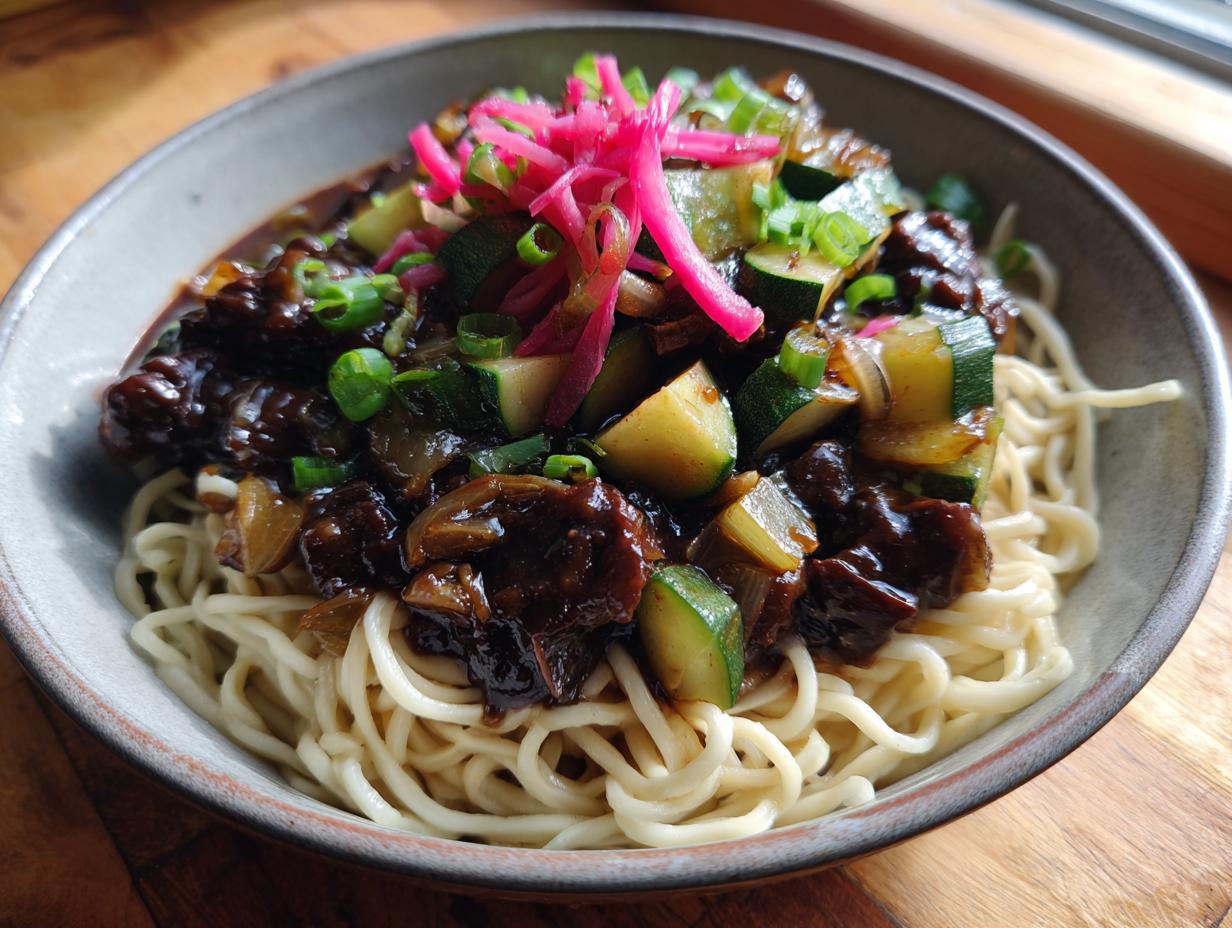
Oh, Jajangmyeon! Just the sound of it makes my stomach rumble and my heart sing a little! If you’ve never had the joy of slurping down a bowl of these glossy, savory black bean noodles, you are in for an absolute treat. Seriously, this isn’t just another dish; it’s a culinary hug, a celebration in a bowl, and one of Korea’s most beloved comfort foods. I remember the first time I tried Jajangmyeon – it was at a tiny, bustling Korean restaurant, and I was instantly hooked. The rich, slightly sweet, deeply umami sauce clinging to those perfectly chewy noodles? Pure magic!
For me, Jajangmyeon isn’t just about the incredible flavor; it’s wrapped up in so many happy memories. It’s the dish I crave after a long day, the one my friends always request, and the perfect quick meal when I want something truly satisfying without a ton of fuss. It’s so popular in Korea that it’s often delivered right to your door, a true sign of its comfort food status. And guess what? You don’t need a fancy Korean restaurant to get that authentic taste. I’m going to show you exactly how to whip up a batch that tastes just like the real deal, right in your own kitchen!
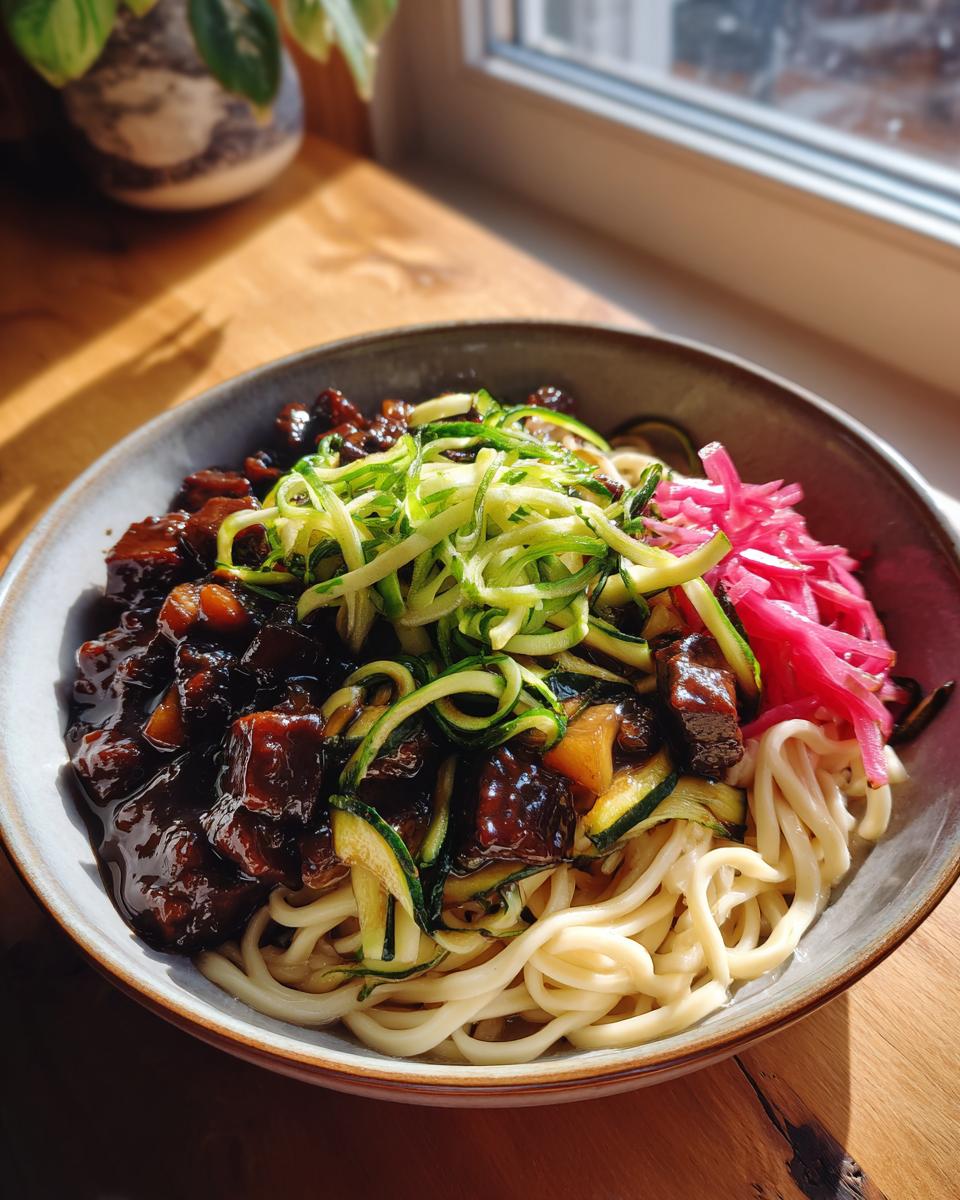
Why You’ll Love This Jajangmyeon Recipe
Okay, so why *this* Jajangmyeon recipe? Because it’s not just delicious, it’s a total game-changer for your weeknight dinner rotation! You’re going to love it because:
- It’s surprisingly easy! Seriously, don’t let the “authentic” part intimidate you. We’re talking simple steps for incredible flavor.
- That authentic taste! We’re capturing all those rich, savory, slightly sweet notes you crave.
- Super satisfying! Those thick noodles and hearty sauce? You’ll be full and happy, I promise.
- Quick win! From start to finish, you can have this amazing meal on the table in under an hour.
- Customizable! Feel free to tweak it to your heart’s content.
The Allure of Jajangmyeon
There’s just something incredibly captivating about Jajangmyeon. It’s that deep, earthy black bean sauce, lovingly coating every single noodle, with those tender bits of meat and veggies. It’s a dish that brings people together, often shared with friends and family, marking celebrations or just making a regular day feel special. It’s truly a hug in a bowl!
Essential Equipment for Perfect Jajangmyeon
You don’t need a professional kitchen to make amazing Jajangmyeon, but having the right tools definitely makes life easier! First up, a good, sturdy large pot or wok is really important for getting that sauce just right. It gives you plenty of room to stir and brown everything without overcrowding. Then, you’ll want a decent cutting board and a sharp knife for all those veggies and the beef. And of course, a large pot for cooking your noodles is a must – you want them to have enough space to swim around and cook evenly. Trust me, these simple things make a big difference!
Ingredients for Authentic Jajangmyeon
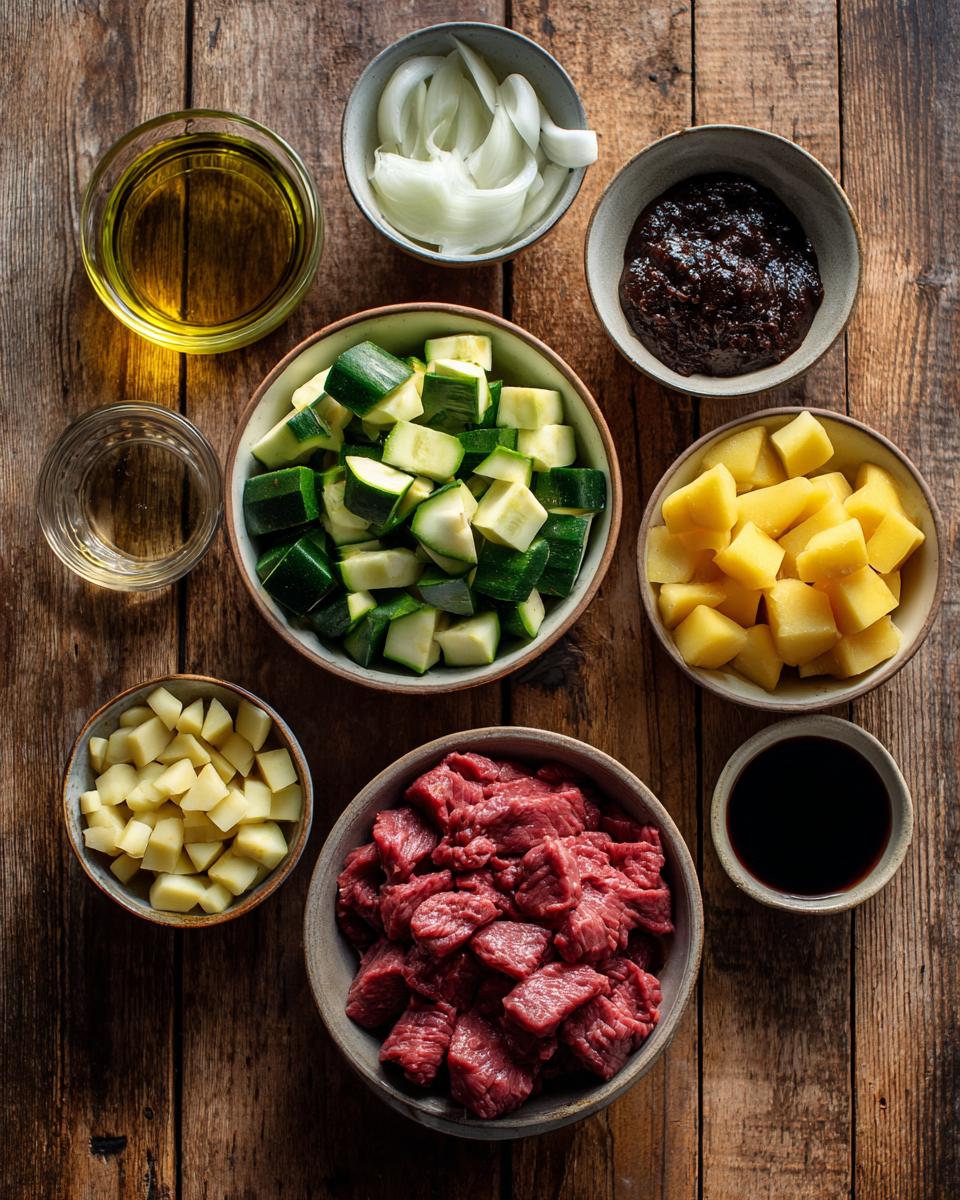
Alright, let’s talk ingredients! This is where the magic really starts to happen for our Jajangmyeon. Don’t worry, nothing too wild here, just good, honest ingredients that come together for an amazing flavor explosion. Here’s what you’ll need to gather:
- 1 tablespoon olive oil: Just a little bit to get things started and sauté those veggies.
- 1 medium onion, diced: We want nice, even pieces here, not too small, not too big.
- 1 medium zucchini, diced: Again, aim for similar sized dice as your onion so everything cooks evenly.
- 1 cup diced potato: I usually go for a starchy potato like a Russet, peeled and cut into small cubes. These get super tender in the sauce!
- 1/2 pound beef sirloin, diced: Cut it into bite-sized pieces, about 1/2 inch cubes. You want something that will be tender after cooking.
- 1/4 cup chunjang (Korean black bean paste): This is the star of the show! It’s a dark, rich, savory paste. You can find it at most Asian grocery stores.
- 1 cup water or broth: Either works great! Broth will add a little extra depth of flavor.
- 1 tablespoon cornstarch mixed with 2 tablespoons water (slurry): This is our secret weapon for a perfectly thick, glossy sauce.
- 1 teaspoon sugar: Just a touch to balance out the savory notes of the black bean paste.
- 1/2 teaspoon black pepper: A classic seasoning that brings everything together.
- 1 pound fresh or dried wheat noodles: Udon noodles are fantastic here, or even thick spaghetti if you can’t find them.
- Cucumber, julienned: For garnish. Those crisp, fresh strips are such a lovely contrast!
- Radish pickles (danmuji), sliced: Also for garnish. Their tangy crunch is so good with the rich sauce.
Key Ingredients for Your Jajangmyeon Sauce
The heart and soul of this Jajangmyeon recipe is, without a doubt, the sauce! It’s all about that incredible chunjang – the Korean black bean paste. That’s what gives it its signature color and deep, earthy flavor. Then we’ve got our supporting cast: the sweet notes from the diced onion, the tender bite of potato and zucchini, and the savory richness of our beef sirloin. And don’t forget the cornstarch slurry; it’s what makes it beautifully thick and glossy!
How to Make Jajangmyeon: Step-by-Step Instructions
Alright, let’s get cooking! This is where we bring all those amazing ingredients together to create that irresistible Jajangmyeon. Don’t rush it, but also don’t overthink it – it’s really quite straightforward. Just follow these steps, and you’ll be slurping up deliciousness in no time!
First things first, grab your largest pot or a trusty wok. You want plenty of space for everything to cook evenly. Heat that olive oil over medium heat until it shimmers a little. Now, toss in your diced onion, zucchini, and potato. We’re going for tender here, so let them cook down for about 5-7 minutes, stirring occasionally. You’ll see the onions start to soften and turn a bit translucent. Yum!
Next up, it’s time for the protein! Add your diced beef sirloin to the pot. Cook it, stirring often, until it’s nicely browned on all sides, usually about 5 minutes. No need to cook it all the way through yet, just get some good color on it. If your pot seems a bit crowded, you can always cook the beef in batches to ensure it browns instead of steams.
Now for the star: the chunjang! Stir that beautiful black bean paste into the pot with all the veggies and beef. This step is crucial for developing that deep, rich flavor. Cook it for 2-3 minutes, stirring constantly. You’re essentially “toasting” the paste, which mellows its raw flavor and brings out its nutty, savory notes. Don’t walk away during this part; you don’t want it to burn!
Pour in your water or broth, then add the sugar and black pepper. Give it a good stir to combine everything. Bring that mixture to a gentle simmer and let it bubble away for 10-15 minutes. This gives the potatoes time to get perfectly tender and allows all those flavors to meld together. Keep an eye on it and stir occasionally so nothing sticks to the bottom.
While your sauce is simmering, it’s the perfect time to get your noodles ready. Set a large pot of water to boil for them. Once the sauce has cooked for its 10-15 minutes and the potatoes are soft, give your cornstarch slurry a quick whisk again (it tends to settle!). Stir it into the simmering sauce. Keep stirring gently, and you’ll see the sauce magically thicken up and get that gorgeous, glossy sheen in about 2-3 minutes. Once it’s thick enough to coat the back of a spoon, you’re good to go! Remove it from the heat.
Finally, cook your noodles according to the package directions. Fresh noodles usually cook super fast, but dried ones will take a bit longer. Once they’re al dente – tender but still with a slight bite – drain them really well. No one wants watery Jajangmyeon! Divide the hot noodles among your serving bowls, then generously ladle that incredible black bean sauce over them. Garnish with those crisp julienned cucumber and tangy radish pickles if you have them. Serve it up immediately and get ready for some serious noodle-slurping!
Preparing Your Jajangmyeon Sauce
The secret to an amazing Jajangmyeon is all in the sauce, and getting it right is easier than you think! Start by really browning your beef and sautéing your veggies until they’re tender. Then, don’t skip toasting that chunjang for a few minutes; it deepens the flavor wonderfully. Finally, let it simmer long enough for the potatoes to soften and for all those beautiful flavors to truly come together before thickening it with the cornstarch slurry. That’s how you get that rich, glossy perfection!
Cooking Your Jajangmyeon Noodles
For the noodles, you’ll want a big pot of generously salted boiling water. Cook them according to the package instructions, but keep an eye on them – you want them perfectly chewy, not mushy! Fresh noodles are traditional and amazing, but thick spaghetti works great too. Once they’re done, drain them immediately. Don’t rinse them unless the package says to; the starch helps the sauce cling better. Get them into bowls quickly and get that sauce on top!
Jajangmyeon Tips for Success
So, you’re ready to make the best Jajangmyeon ever, right? Here are my top tips to make sure your bowl is nothing short of perfection! First, always, always use good quality chunjang. It’s the heart of the dish, so don’t skimp! Also, don’t be afraid to taste and adjust the seasoning. A little more sugar can balance the bitterness of the black bean paste, or a pinch of salt can really make the flavors pop. And hey, for an extra layer of flavor, sometimes I’ll add a tiny bit of sesame oil right at the end, just before serving. Trust me, it’s a game-changer!
Variations and Substitutions for Jajangmyeon
One of the best things about Jajangmyeon is how versatile it is! If beef isn’t your thing, you can totally use diced chicken, shrimp, or even firm tofu for a fantastic vegetarian option. Feel free to play around with the veggies too! Carrots, mushrooms, or even some cabbage would be delicious additions. For a little kick, a pinch of gochugaru (Korean chili powder) in the sauce adds a lovely warmth. Don’t be shy; make it your own!
Common Questions About Jajangmyeon
Okay, so you’ve got your Jajangmyeon cooking, and maybe a few questions popped into your head! That’s totally normal. I get asked these all the time, so let’s clear them up quickly. Knowing these little tidbits will help you feel even more confident in your Jajangmyeon-making adventures, and trust me, you’ll want to make this dish again and again!
What is Chunjang in Jajangmyeon?
Chunjang is the star of our Jajangmyeon! It’s a fermented Korean black bean paste, and it’s what gives the sauce its signature dark color and deeply savory, slightly bitter, and subtly sweet flavor. You really can’t make authentic Jajangmyeon without it!
Can I Make Jajangmyeon Vegetarian?
Absolutely, yes! To make Jajangmyeon vegetarian, simply swap the beef for firm tofu or mushrooms. You can also use vegetable broth instead of water or meat broth. It’s still incredibly delicious and satisfying!
How to Store Leftover Jajangmyeon?
The best way to store leftover Jajangmyeon is to keep the sauce and noodles separate. Store the sauce in an airtight container in the fridge for up to 3-4 days. Cook fresh noodles when you’re ready to eat, or reheat the sauce gently and pour over previously cooked noodles.
Estimated Jajangmyeon Nutritional Information
Just a quick note on the good stuff inside your amazing bowl of Jajangmyeon! Based on this recipe, one serving is roughly 550 calories, with about 20g of fat, 30g of protein, and 70g of carbohydrates. Remember, these are just estimates, and they can totally vary depending on the exact brands and ingredients you use. Think of it as a general guide!
Share Your Jajangmyeon Experience
Okay, now it’s YOUR turn! You’ve made it, you’ve tasted it, and I bet you’re loving it! I absolutely can’t wait to hear how your Jajangmyeon turned out. Did you add any fun variations? What was your favorite part of making it? Drop a comment below and let me know! And hey, if you snap a pic, tag me on social media – I’d love to see your delicious creations!
Print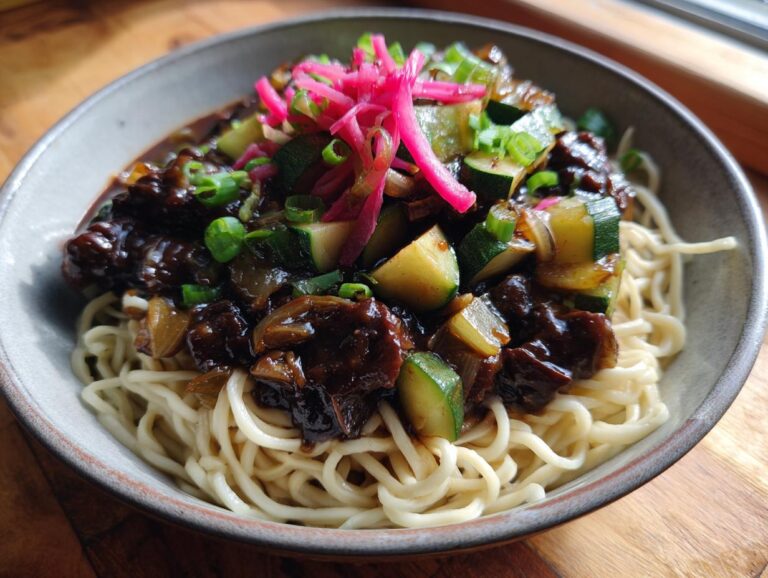
Jajangmyeon with Black Bean Sauce
Jajangmyeon is a popular Korean noodle dish topped with a thick sauce made from chunjang (sweet black bean paste), diced meat (usually pork, but beef or other alternatives can be used), and vegetables. It’s a satisfying and flavorful meal often enjoyed for lunch or dinner.
- Total Time: 50 minutes
- Yield: 4 servings 1x
Ingredients
- 1 tablespoon olive oil
- 1 medium onion, diced
- 1 medium zucchini, diced
- 1 cup diced potato
- 1/2 pound beef sirloin, diced
- 1/4 cup chunjang (Korean black bean paste)
- 1 cup water or broth
- 1 tablespoon cornstarch mixed with 2 tablespoons water (slurry)
- 1 teaspoon sugar
- 1/2 teaspoon black pepper
- 1 pound fresh or dried wheat noodles (udon or thick spaghetti)
- Cucumber, julienned (for garnish)
- Radish pickles (for garnish)
Instructions
- Heat olive oil in a large pot or wok over medium heat. Add onion, zucchini, and potato. Cook until softened, about 5-7 minutes.
- Add diced beef to the pot and cook until browned, about 5 minutes.
- Stir in the chunjang and cook for 2-3 minutes, stirring constantly, to toast the paste.
- Pour in water or broth, sugar, and black pepper. Bring to a simmer and cook for 10-15 minutes, or until potatoes are tender.
- Stir in the cornstarch slurry and cook until the sauce thickens, about 2-3 minutes.
- Meanwhile, cook noodles according to package directions. Drain well.
- Divide noodles among serving bowls. Ladle a generous amount of the black bean sauce over the noodles.
- Garnish with julienned cucumber and radish pickles, if desired. Serve immediately.
Notes
- For a spicier version, add a pinch of gochugaru (Korean chili powder) to the sauce.
- You can substitute beef with chicken, shrimp, or tofu for a different protein option.
- Fresh noodles are traditional for jajangmyeon, but dried wheat noodles or even thick spaghetti can be used as alternatives.
- Adjust the amount of sugar to your preference for sweetness.
- Prep Time: 20 minutes
- Cook Time: 30 minutes
- Category: Main Dish
- Method: Stovetop
- Cuisine: Korean
- Diet: None
Nutrition
- Serving Size: 1 serving
- Calories: 550
- Sugar: 8g
- Sodium: 1200mg
- Fat: 20g
- Saturated Fat: 7g
- Unsaturated Fat: 10g
- Trans Fat: 0g
- Carbohydrates: 70g
- Fiber: 5g
- Protein: 30g
- Cholesterol: 50mg