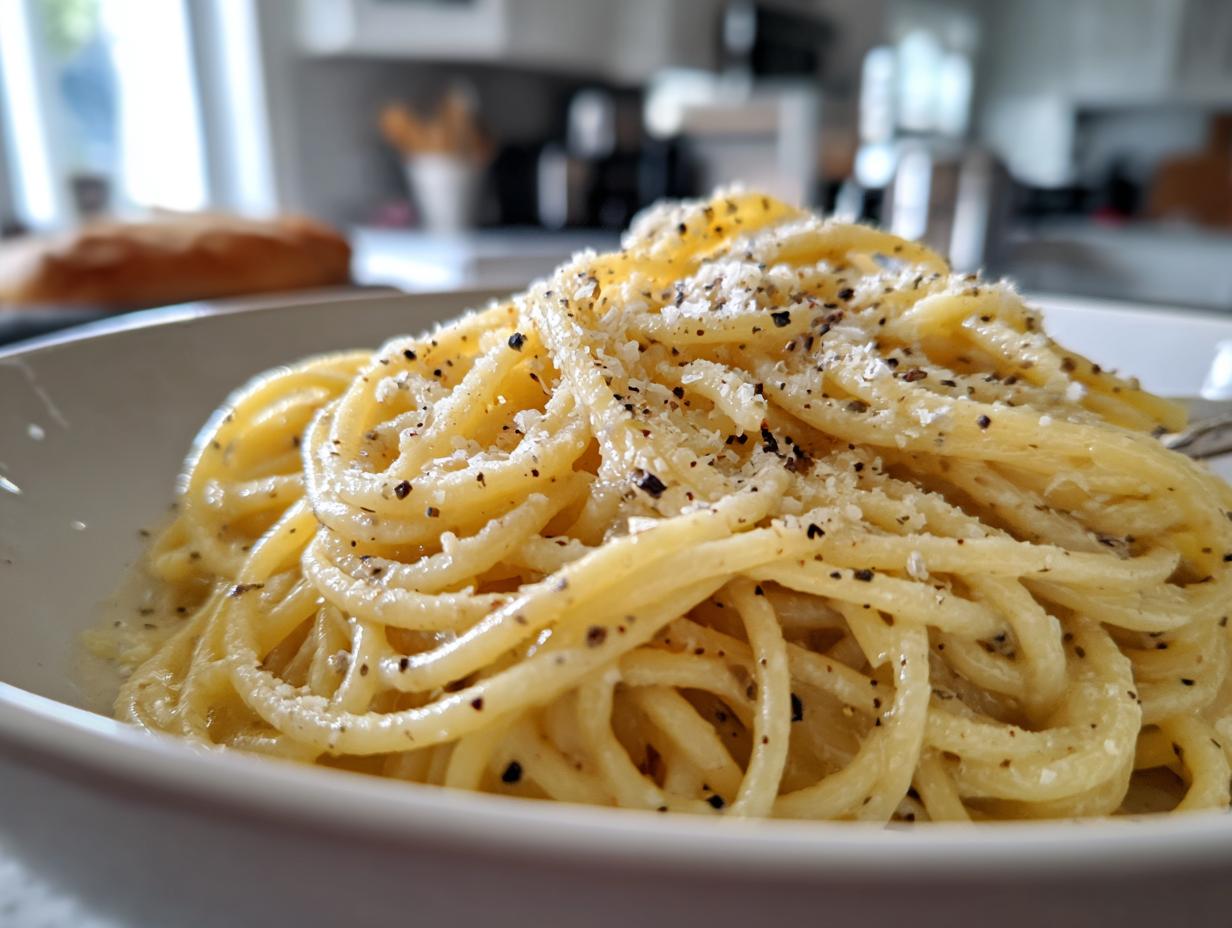
Oh, Cacio e Pepe! Just saying the name brings a smile to my face and a rumble to my stomach. If you’ve never had the pleasure of experiencing this Roman masterpiece, get ready for a revelation. It’s one of those dishes that seems almost too simple to be true – just cheese, pepper, and pasta – but the magic that happens when these humble ingredients come together? Pure culinary alchemy, I tell you!
I remember the first time I truly *understood* Cacio e Pepe. I was in a tiny trattoria in Rome, tucked away on a cobbled street, and this creamy, peppery, cheesy plate arrived. I took one bite, and honestly, my world shifted a little. It wasn’t just food; it was an experience. The way the sauce clung to every strand of pasta, the warmth, the subtle bite of the pepper – it was perfection. And that’s what I want to share with you today. After years of perfecting my own approach to Italian cuisine, this Cacio e Pepe recipe is one I come back to again and again. It’s simple, elegant, and utterly delicious!
Why You’ll Love This Cacio e Pepe
The Allure of Cacio e Pepe
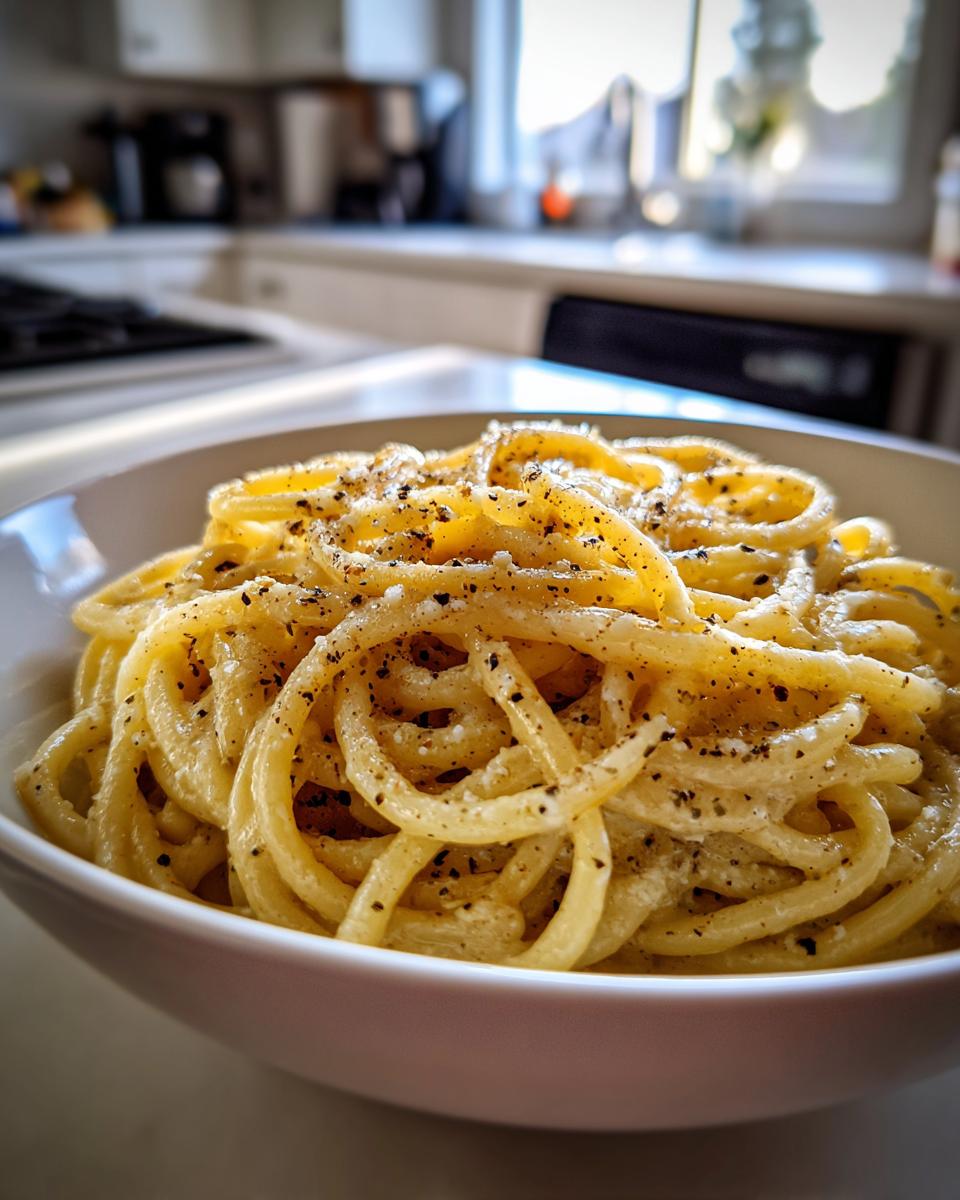
Honestly, what’s not to love? This Cacio e Pepe recipe is a total winner because it’s so incredibly simple, yet delivers HUGE on flavor. We’re talking minimal ingredients – probably stuff you already have in your pantry – coming together in a flash. It’s perfect for a quick weeknight meal when you’re craving something comforting and delicious. Plus, it’s naturally vegetarian-friendly, so it’s a crowd-pleaser for almost everyone around your table. It truly proves that sometimes, less really is more!
Our Authentic Cacio e Pepe Recipe
Now, I know there are a million Cacio e Pepe recipes out there, but trust me, this one is special. We’re sticking to the true Roman way, no shortcuts or weird additions here! It’s all about honoring those classic techniques that make the sauce so unbelievably creamy and coats every single strand of pasta perfectly. You’ll get that authentic peppery kick and the rich, salty goodness of the Pecorino Romano that makes this dish an absolute dream. Get ready for a taste of Italy right in your own kitchen!
Essential Equipment for Making Cacio e Pepe
Tools for Perfect Cacio e Pepe
Okay, so Cacio e Pepe is all about simplicity, right? That goes for the equipment too! You don’t need a fancy gadget for every single step, but having the right tools makes all the difference in getting that perfect, creamy sauce. Trust me on this one, a good sturdy pot for your pasta and a way to get those peppercorns perfectly crushed are non-negotiables for me!
Ingredients for Authentic Cacio e Pepe
Key Ingredients for Cacio e Pepe
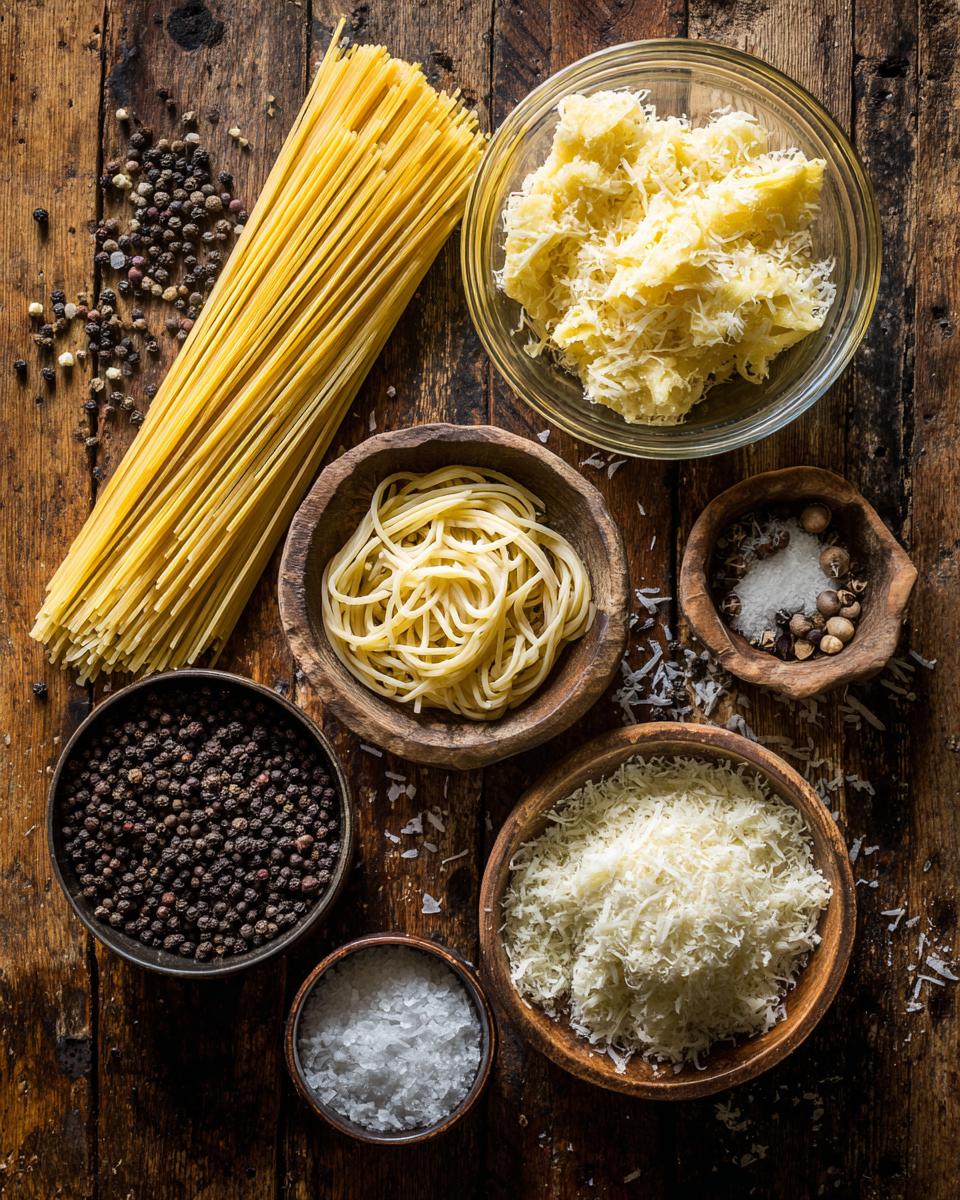
Alright, let’s talk ingredients! This is where the magic really begins. For the best Cacio e Pepe, you absolutely need to start with quality. First up, the pasta! I always go for 1 pound (450g) of spaghetti or tonnarelli. Tonnarelli is traditional and has a lovely rough texture that grabs onto the sauce, but good quality spaghetti works beautifully too. Then, the star of the show: 2 cups (200g) of finely grated Pecorino Romano cheese. And I mean *finely* grated! Not the pre-shredded stuff, please. You want it almost powdery so it melts into that gorgeous sauce. Next, the spice: 1 tablespoon whole black peppercorns. Whole, my friends, not pre-ground! And finally, a tiny bit of salt, but seriously, go easy – that Pecorino is salty enough on its own!
Ingredient Notes and Substitutions for Cacio e Pepe
I cannot stress this enough: the quality of your Pecorino Romano and black pepper will make or break your Cacio e Pepe. Don’t skimp here! A good block of Pecorino Romano, preferably from a specialty cheese shop, will give you that authentic sharp, salty kick. As for the pepper, whole peppercorns that you toast and grind yourself? Game changer! The aroma and fresh bite are just incomparable. If you can’t find tonnarelli, good quality spaghetti is your next best bet. Bucatini also works wonders because of its hollow center, which captures the sauce so well. You want a pasta that’s sturdy and has a good surface for the sauce to cling to. And don’t worry, there’s no alcohol in this recipe, so no need for alcohol-free vanilla notes here – just pure, simple deliciousness!
How to Make Cacio e Pepe: Step-by-Step Instructions
Preparing Your Cacio e Pepe
Alright, let’s get cooking! This part is all about setting yourself up for success. First things first, grab that big pot – the biggest one you have! Fill it up with water, and here’s a crucial tip from me: you want it generously salted. I’m talking like the sea, almost. This is your only chance to season the pasta itself, so don’t be shy. Get that water boiling vigorously. While you’re waiting, grab your whole black peppercorns. Pop them into a dry skillet over medium heat. Keep them moving, shaking the pan for just 1-2 minutes until you can really smell that amazing, spicy aroma. Oh, it’s heavenly! As soon as they’re fragrant, take them off the heat and transfer them to your mortar and pestle (or a spice grinder if you have one). Get to grinding! You want them coarsely ground, not a fine powder. That texture is key for the Cacio e Pepe experience!
Crafting the Creamy Cacio e Pepe Sauce
Now for the fun part – making that unbelievably creamy sauce! While your pasta is doing its thing in the boiling water (cook it until it’s perfectly al dente, just a little bite to it!), grab a large bowl. This is where the magic emulsification happens! Take your finely grated Pecorino Romano cheese and pop it in the bowl. Here’s a trick: add just a tablespoon or two of cold water, and mix it *really* well until it forms a thick, smooth paste. It might seem weird, but this helps prevent clumping later. Before you drain that perfectly cooked pasta, don’t forget to scoop out about 1 to 1.5 cups of that starchy pasta cooking water. This water is liquid gold, seriously! Now, drain your pasta quickly and immediately add it to the bowl with your Pecorino paste and all that freshly ground black pepper. This is where you need to work fast!
Add about 1/2 cup of your reserved pasta water to the pasta and cheese mixture. Now, get ready to toss! And I mean *toss vigorously and continuously*. Use tongs or a big spoon, just keep moving that pasta! The goal is to emulsify that cheese and water into a beautiful, silky sauce that coats every strand. If it looks too dry, add more pasta water, just a tablespoon at a time, still tossing like crazy. You’ll see it transform right before your eyes, going from separate ingredients to a luxurious, creamy sauce. It’s truly satisfying!
Serving Your Cacio e Pepe
Okay, the sauce is creamy, the pasta is coated, and your kitchen smells incredible! This is important: Cacio e Pepe waits for no one. You absolutely, positively *must* serve it immediately. Don’t let it sit around, or that beautiful sauce will start to seize up. Taste it quickly and adjust for salt if you need to, but remember, Pecorino is super salty on its own, so usually, you won’t need much, if any, extra salt. Dish it out into warm bowls, and for a final flourish, add a little extra grated Pecorino Romano on top and another sprinkle of that amazing fresh black pepper. Take a moment, breathe in that aroma, and enjoy every single slurp. You just made Cacio e Pepe, and it’s going to be amazing!
Tips for Perfect Cacio e Pepe
Mastering Your Cacio e Pepe
Alright, so you’ve got the steps down, but here are my absolute golden rules for truly mastering your Cacio e Pepe. First, and I can’t stress this enough, work quickly! Once that pasta hits the cheese and pepper, you need to be a whirlwind of tossing. If things cool down too much, your sauce will seize. Second, never, ever rinse your pasta! That starchy coating is your best friend; it’s what helps create that luscious, creamy emulsion with the Pecorino. Third, be patient with the pasta water – add it gradually, a tablespoon at a time, until you hit that perfect consistency. It’s all about feeling it out. Trust me, these little details will take your Cacio e Pepe from good to absolutely unforgettable!
Frequently Asked Questions About Cacio e Pepe
Can I use pre-ground pepper for Cacio e Pepe?
Oh, please don’t! While you *can* use pre-ground pepper, it won’t give you that incredible, vibrant flavor that makes Cacio e Pepe so special. Pre-ground pepper loses its aromatic oils really fast, so it tastes flatter, almost dusty. Using whole black peppercorns that you toast and then coarsely grind yourself? That’s where the magic is! You get this amazing fresh, spicy kick and a beautiful texture that you just can’t replicate any other way. It’s a small extra step, but it makes a huge difference, trust me!
What kind of pasta works best for Cacio e Pepe?
Traditionally, Cacio e Pepe is made with spaghetti or tonnarelli. Tonnarelli is a square-edged spaghetti that’s super authentic, and its rougher texture really clings to the sauce. But good quality spaghetti is fantastic too! The key is a long, sturdy pasta that has enough surface area and a good amount of starch to help create that creamy sauce. You want something that can stand up to all that vigorous tossing. I’ve even seen bucatini used, and its hollow center is brilliant for trapping the sauce. Just avoid anything too delicate or too small, like angel hair or orzo, as they won’t give you the same authentic Roman Cacio e Pepe experience.
Why isn’t my Cacio e Pepe sauce creamy?
Ah, the classic Cacio e Pepe dilemma! If your sauce isn’t creamy, don’t worry, it’s a common hurdle, but totally fixable. The most likely culprits are usually temperature, not enough pasta water, or your cheese preparation. First, remember how I said to work quickly? If your pasta cools down too much, the cheese won’t melt properly. Second, that starchy pasta water is EVERYTHING! You need enough of it, added gradually, to emulsify with the Pecorino. If you add too little, it’ll be clumpy; too much, and it’ll be watery. And finally, make sure your Pecorino is *finely* grated, almost powdery. If it’s too thick, it won’t melt smoothly. Keep tossing, keep the heat (from the pasta, not direct heat!), and add that starchy water little by little – you’ll get there!
Storing and Reheating Cacio e Pepe
Enjoying Leftover Cacio e Pepe
Okay, so Cacio e Pepe is truly best devoured fresh, right off the stove. But hey, sometimes you have leftovers, and that’s totally fine! If you do, pop any extra Cacio e Pepe into an airtight container and stick it in the fridge. When you’re ready to reheat, don’t just zap it in the microwave unless you want dry, clumpy pasta! The best way is to gently warm it in a skillet over low heat with a splash of water or broth, stirring constantly until it loosens up and gets creamy again. It won’t be *quite* the same as fresh, but it’ll still be delicious!
Estimated Nutritional Information for Cacio e Pepe
Just a quick note on the numbers! For one serving of this amazing Cacio e Pepe, you’re looking at roughly 450 calories, 18g of fat (with about 10g saturated), 45g of carbohydrates, and a solid 25g of protein. There’s also around 800mg of sodium and 40mg of cholesterol. Remember, these are just estimates, and they can totally vary depending on the exact brands of pasta and cheese you use. But it gives you a good idea!
Share Your Cacio e Pepe Experience
Your Cacio e Pepe Creations
So, you’ve made it! You’ve whipped up a batch of authentic Cacio e Pepe, and I bet your kitchen smells incredible. I would absolutely LOVE to hear about your experience! Did you nail that creamy sauce? What was your favorite part of making it? Drop a comment below, give the recipe a star rating, or even better, share a photo of your masterpiece on social media! Tag me with #MyCacioEPepedish so I can see all your amazing creations. Let’s celebrate the magic of Cacio e Pepe together!
Print
Homemade Cacio e Pepe Pasta
Cacio e Pepe is a classic Roman pasta dish made with Pecorino Romano cheese, black pepper, and pasta. It is known for its simple yet flavorful profile, creating a creamy sauce with minimal ingredients.
- Total Time: 25 minutes
- Yield: 4 servings 1x
Ingredients
- 1 pound (450g) spaghetti or tonnarelli
- 1 tablespoon whole black peppercorns
- 2 cups (200g) finely grated Pecorino Romano cheese, plus more for serving
- Salt to taste (use sparingly, as Pecorino is salty)
Instructions
- Bring a large pot of generously salted water to a boil. Add the pasta and cook according to package directions until al dente.
- While the pasta cooks, toast the whole black peppercorns in a dry skillet over medium heat for 1-2 minutes, until fragrant.
- Transfer the toasted peppercorns to a mortar and pestle or a spice grinder and coarsely grind them.
- In a large bowl, combine the finely grated Pecorino Romano cheese with a tablespoon or two of cold water. Mix well to form a thick paste.
- Before draining the pasta, reserve about 1 to 1.5 cups of the starchy pasta cooking water.
- Drain the pasta and immediately add it to the bowl with the Pecorino paste and ground black pepper.
- Add about 1/2 cup of the reserved pasta water to the pasta and cheese mixture. Toss vigorously and continuously, adding more pasta water a tablespoon at a time, until a creamy sauce forms and coats the pasta. The key is to emulsify the cheese and water.
- Taste and adjust seasoning with salt if needed (remember Pecorino is salty).
- Serve immediately, garnished with additional grated Pecorino Romano and a sprinkle of fresh black pepper.
Notes
- The quality of your Pecorino Romano and black pepper will significantly impact the flavor of this dish.
- The texture of the sauce relies on the starch from the pasta water emulsifying with the cheese.
- Work quickly once the pasta is drained to prevent it from cooling down too much.
- Do not rinse the pasta after draining, as you need the starch for the sauce.
- Prep Time: 10 minutes
- Cook Time: 15 minutes
- Category: Main Course
- Method: Stovetop
- Cuisine: Italian
- Diet: Vegetarian
Nutrition
- Serving Size: 1 serving
- Calories: 450
- Sugar: 2g
- Sodium: 800mg
- Fat: 18g
- Saturated Fat: 10g
- Unsaturated Fat: 6g
- Trans Fat: 0g
- Carbohydrates: 45g
- Fiber: 3g
- Protein: 25g
- Cholesterol: 40mg